
Cranbrook Limescale Checks: Finding Boiler Installation and Servicing Support
Learn how limescale can affect boiler performance in Cranbrook and what to consider when arranging servicing or planning a new boiler installation.

Why you can trust our content
We understand that the boiler industry can be confusing, with plenty of outdated or misleading information. That’s why we rely only on trusted, proven sources to guide our advice and installations:






At a glance
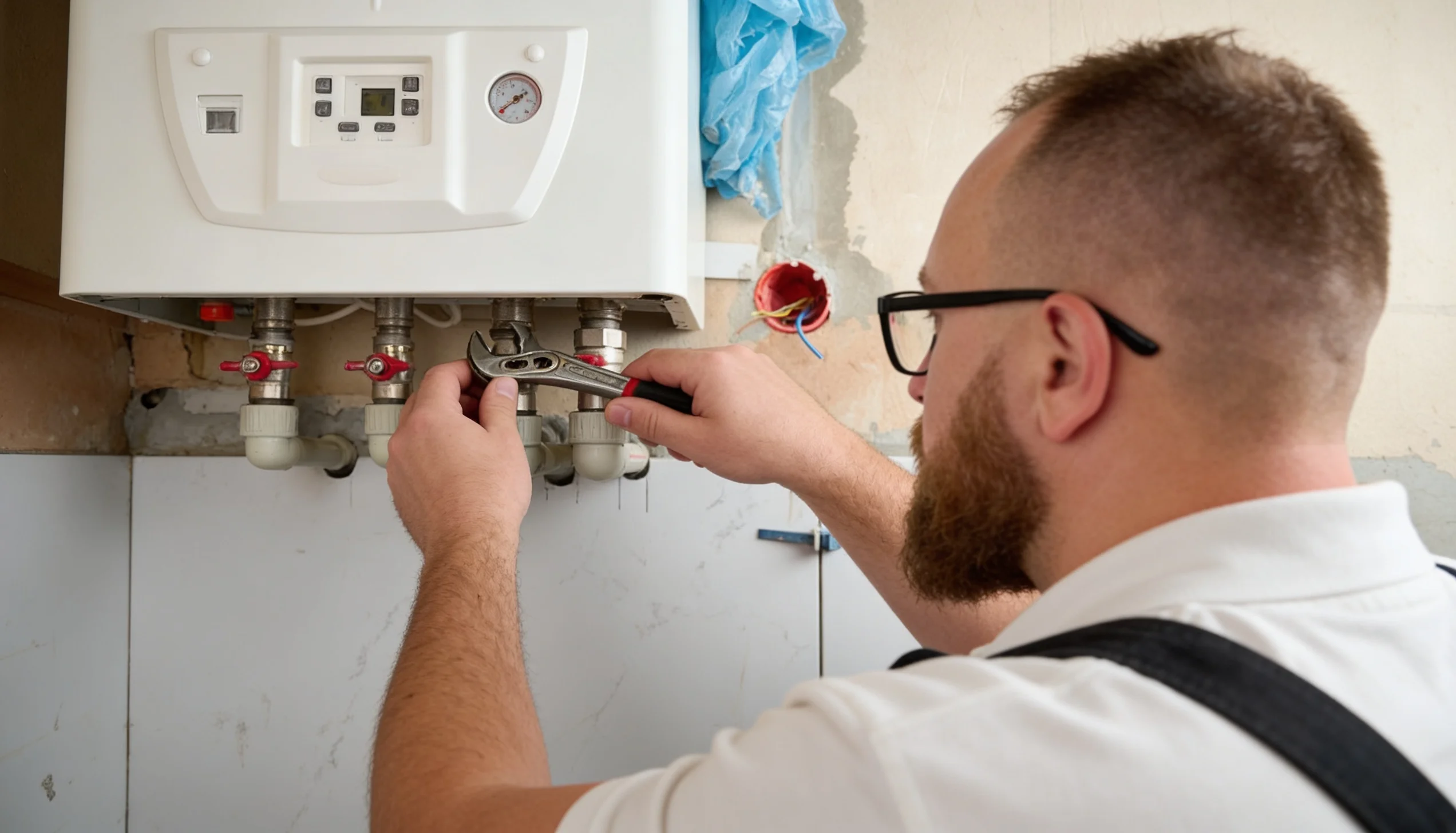
While some faults happen unexpectedly, many boiler issues provide warning signs before a complete failure occurs. Regular maintenance gives homeowners the opportunity to identify these signs early and take action before problems become more disruptive.
For homeowners in Cranbrook, keeping a heating system well maintained can provide greater confidence throughout the year, especially when temperatures drop and the boiler is working harder.
Introduction
Limescale is a gradual issue that can affect heating and hot water systems where hard water is present. Because mineral deposits can build up over time, homeowners may not notice a problem until a boiler begins behaving differently.
A change in hot water performance, a new rumbling noise or repeated boiler shutdowns can all prompt questions about what should happen next. Is routine servicing enough, or is the system showing signs that a new boiler should be considered?
There is no single answer based on limescale alone. A proper assessment should consider the boiler’s age, condition, performance, maintenance history and any symptoms being experienced.
For homeowners in Cranbrook, understanding what to look for can make it easier to arrange appropriate servicing and recognise when installation advice may be useful.
What Is Limescale and Why Does It Matter?
Limescale is a mineral deposit that can form when water containing dissolved minerals is heated. Over time, deposits can accumulate on surfaces and components exposed to heated water.
The potential impact depends on the system and the amount of scale present. Significant deposits can contribute to changes in heat transfer and hot water performance.
Possible symptoms include:
- Slower hot water heating
- Kettling-type or rumbling noises
- Changes in temperature stability
- Reduced performance
- Additional strain on affected components
However, none of these symptoms proves that limescale is the cause.
A similar problem could be related to circulation, controls, pressure or a component fault. This is why professional diagnosis is important before deciding what work is necessary.
Can Limescale Affect Every Boiler in the Same Way?
No.
Different boilers and heating systems respond differently to water conditions. The extent of any scale accumulation can also vary according to water conditions, usage, maintenance and system design.
A boiler may therefore operate reliably for years in hard water conditions, while another appliance may develop performance issues sooner.
This is one reason general advice about limescale should not replace an assessment of the individual heating system.
Which Symptoms Should Cranbrook Homeowners Watch For?
Boiler problems do not always begin with a complete breakdown.
Instead, homeowners may notice smaller changes first. These can include:
- A new or louder operating noise
- Hot water taking longer to heat
- Temperature fluctuations
- Repeated boiler resets
- Pressure changes
- Unexpected shutdowns
- Reduced heating performance
- Unusual smells or visible leaks
Some symptoms can be relatively minor, while others require prompt professional attention.
A homeowner does not need to determine whether a symptom is caused by limescale. Recording what has changed and explaining it to an engineer is generally more useful.
Why Is Boiler Servicing Important?
Routine servicing provides an opportunity to check the appliance and identify potential issues in line with relevant requirements and manufacturer guidance.
For homeowners arranging boiler servicing Cranbrook, it is useful to explain any changes that have occurred since the previous appointment.
For example, tell the engineer if:
- The boiler has become noisier
- Hot water performance has changed
- The appliance is resetting more frequently
- Pressure appears to be changing
- The system has developed an intermittent fault
This information can help the engineer consider whether further investigation is needed.
A service is not necessarily the same as a repair. If a boiler has already developed a significant fault, additional diagnostic or repair work may be required.
Can Servicing Prevent Limescale?
Routine servicing cannot guarantee that limescale will not form.
Where hard water is present, the underlying mineral content remains part of the property’s water supply. Servicing can help identify appliance problems, but it does not remove the cause of hard water.
If scale has previously been identified as a recurring concern, homeowners can discuss suitable management options with a qualified professional.
The correct approach depends on the particular boiler and heating system.
** If your boiler is due for maintenance, mention any changes in noise or hot water performance so the engineer can consider them as part of the wider assessment.**
When Should You Consider Boiler Installation Advice?
A new boiler does not automatically become necessary because limescale is present.
However, an installation assessment may be worth considering if the existing appliance:
- Is older and becoming less reliable
- Has required repeated repairs
- No longer meets household heating or hot water requirements
- Has developed several problems
- Is approaching the end of its useful service life
For homeowners researching boiler installation Cranbrook, the assessment should consider the wider system rather than focusing solely on the replacement appliance.
What Should Be Considered Before Replacing a Boiler?
| Consideration | Why it matters |
|---|---|
| Boiler age | Provides context for replacement planning |
| Current condition | Shows whether problems are isolated or widespread |
| Repair history | Repeated repairs may affect long-term decisions |
| Heating demand | Helps determine whether the current system remains suitable |
| Hot water demand | Relevant to system selection |
| Existing pipework | May influence installation requirements |
| Water pressure and flow | Can affect system performance |
| Water conditions | May make scale management worth discussing |
| Controls | Can influence how the new system operates |
A professional assessment can establish which of these factors are relevant to the individual property.
Does a New Boiler Remove the Risk of Limescale?
No.
Replacing a boiler changes the appliance but does not change the property’s water supply.
If hard water is present, the new system will still operate under those conditions. Where scale has been a recurring concern, homeowners can discuss whether suitable scale management should form part of the installation plan.
That does not mean every new boiler requires a dedicated scale protection product.
The appropriate approach depends on the water conditions, boiler type, system configuration and relevant manufacturer requirements.
Should Scale Protection Be Considered Before Installation?
It can be worth discussing, particularly where the existing system has experienced recurring scale-related problems.
Before an installation, the homeowner and installer can consider:
- Existing water conditions
- The type of new boiler
- Hot water requirements
- System configuration
- Manufacturer recommendations
- Existing scale-related symptoms
- Appropriate maintenance arrangements
The purpose is to identify what is relevant to the property rather than automatically adding equipment.
A well-planned installation considers the whole system and how it will operate over time.
When Is a Boiler Service Enough?
If the boiler is working normally and simply due for planned maintenance, a service may be the appropriate starting point.
A service can also be useful when a homeowner has noticed minor changes but there is no significant operational failure.
For example, a slightly unusual noise that occurs occasionally may be worth reporting at the next appointment. The engineer can determine whether it appears significant and whether further investigation is required.
However, waiting for a routine service may not be appropriate where the boiler has:
- Completely stopped working
- Developed a significant leak
- Repeatedly shut down
- Lost heating or hot water
- Developed a suspected safety issue
In these circumstances, a more prompt assessment may be appropriate.
What Is the Difference Between a Service and an Installation Assessment?
The two appointments have different purposes.
A service focuses on the condition and operation of the existing appliance, following relevant servicing procedures and manufacturer guidance.
An installation assessment focuses on whether a new system is appropriate and what would be required to install it safely and suitably.
The distinction can be useful when deciding what to book.
| Situation | Potentially appropriate next step |
|---|---|
| Boiler working normally and due maintenance | Routine service |
| Minor performance change | Service or professional assessment |
| Known boiler fault | Repair assessment |
| Frequent breakdowns | Review of repair and replacement options |
| Older appliance with multiple issues | Installation assessment may be useful |
| Major leak or safety concern | Prompt professional or emergency assistance |
These are general guidelines rather than fixed rules. The actual response depends on the appliance and circumstances.
How Can You Tell Whether an Older Boiler Is Becoming Less Reliable?
One isolated fault does not necessarily indicate that a boiler has reached the end of its useful life.
A pattern can be more informative.
Consider whether the boiler has:
- Needed several repairs within a relatively short period
- Developed multiple unrelated faults
- Become increasingly inconsistent
- Struggled to meet household demand
- Required replacement components repeatedly
- Become difficult to maintain
The cost and practicality of continuing repairs should be considered alongside the appliance’s age and condition.
Limescale may be one part of that assessment, but it should not be the sole reason for replacement.
What Should You Do If You Suspect Scale?
The safest approach is to avoid attempting to inspect or clean internal boiler components yourself.
Instead:
- Note the symptoms.
- Record any error code displayed by the appliance, where safe to do so.
- Note when the problem occurs.
- Explain whether heating, hot water or both are affected.
- Tell the engineer if scale has previously been identified.
- Arrange an appropriate professional assessment.
This provides useful information without requiring the homeowner to diagnose the appliance.
** If scale has been identified during previous maintenance, mention it when arranging your next appointment so water conditions can be considered alongside the boiler’s current symptoms.**
Can Homeowners Reduce Scale-Related Problems?
There is no way to guarantee that limescale will never form where hard water is present. However, homeowners can take practical steps to monitor the system.
Keep Maintenance Up to Date
Follow the manufacturer’s servicing recommendations and keep a record of previous work.
Report Changes
Do not ignore persistent changes in boiler noise, hot water performance or pressure behaviour.
Discuss Scale Management
Where hard water has been a recurring issue, ask whether an appropriate scale management approach is relevant.
Avoid DIY Boiler Repairs
Do not open the boiler or attempt to work on internal gas components. Appropriate repairs should be carried out by qualified professionals.
A Typical Cranbrook Example
Consider a homeowner with an older boiler that has been reliable for several years.
Recently, the boiler has started making a rumbling noise when producing hot water. The heating still works and there are no obvious leaks, so the homeowner is unsure whether to book a service or investigate replacement.
The noise could be associated with scale, but that is not the only possibility. A circulation issue or component fault could produce a similar symptom.
A professional assessment can establish the likely cause.
If the boiler is otherwise in good condition, repair or continued maintenance may be appropriate. If it has a history of repeated failures, an installation assessment could help the homeowner understand whether replacement is becoming more practical.
This is why a symptom should be treated as a reason to investigate, not as an automatic diagnosis.
When Is Immediate Boiler Assistance Necessary?
Gradual scale-related symptoms do not automatically require emergency assistance.
However, certain problems should be treated as urgent regardless of whether limescale is suspected.
These include:
- A suspected gas leak
- A carbon monoxide alarm
- Significant water leakage
- An unusual burning smell
- A serious electrical concern
- A boiler fault accompanied by other safety concerns
If you suspect a gas leak or carbon monoxide issue, follow the relevant emergency guidance and do not attempt to investigate the appliance yourself.
Safety should always take priority over identifying the cause of a boiler fault.
Frequently Asked Questions
Related articles
Which fuel powers your boiler?

Mains Gas

LPG

Other
At a glance
While some faults happen unexpectedly, many boiler issues provide warning signs before a complete failure occurs. Regular maintenance gives homeowners the opportunity to identify these signs early and take action before problems become more disruptive.
For homeowners in Cranbrook, keeping a heating system well maintained can provide greater confidence throughout the year, especially when temperatures drop and the boiler is working harder.
Introduction
Limescale is a gradual issue that can affect heating and hot water systems where hard water is present. Because mineral deposits can build up over time, homeowners may not notice a problem until a boiler begins behaving differently.
A change in hot water performance, a new rumbling noise or repeated boiler shutdowns can all prompt questions about what should happen next. Is routine servicing enough, or is the system showing signs that a new boiler should be considered?
There is no single answer based on limescale alone. A proper assessment should consider the boiler’s age, condition, performance, maintenance history and any symptoms being experienced.
For homeowners in Cranbrook, understanding what to look for can make it easier to arrange appropriate servicing and recognise when installation advice may be useful.
What Is Limescale and Why Does It Matter?
Limescale is a mineral deposit that can form when water containing dissolved minerals is heated. Over time, deposits can accumulate on surfaces and components exposed to heated water.
The potential impact depends on the system and the amount of scale present. Significant deposits can contribute to changes in heat transfer and hot water performance.
Possible symptoms include:
- Slower hot water heating
- Kettling-type or rumbling noises
- Changes in temperature stability
- Reduced performance
- Additional strain on affected components
However, none of these symptoms proves that limescale is the cause.
A similar problem could be related to circulation, controls, pressure or a component fault. This is why professional diagnosis is important before deciding what work is necessary.
Can Limescale Affect Every Boiler in the Same Way?
No.
Different boilers and heating systems respond differently to water conditions. The extent of any scale accumulation can also vary according to water conditions, usage, maintenance and system design.
A boiler may therefore operate reliably for years in hard water conditions, while another appliance may develop performance issues sooner.
This is one reason general advice about limescale should not replace an assessment of the individual heating system.
Which Symptoms Should Cranbrook Homeowners Watch For?
Boiler problems do not always begin with a complete breakdown.
Instead, homeowners may notice smaller changes first. These can include:
- A new or louder operating noise
- Hot water taking longer to heat
- Temperature fluctuations
- Repeated boiler resets
- Pressure changes
- Unexpected shutdowns
- Reduced heating performance
- Unusual smells or visible leaks
Some symptoms can be relatively minor, while others require prompt professional attention.
A homeowner does not need to determine whether a symptom is caused by limescale. Recording what has changed and explaining it to an engineer is generally more useful.
Why Is Boiler Servicing Important?
Routine servicing provides an opportunity to check the appliance and identify potential issues in line with relevant requirements and manufacturer guidance.
For homeowners arranging boiler servicing Cranbrook, it is useful to explain any changes that have occurred since the previous appointment.
For example, tell the engineer if:
- The boiler has become noisier
- Hot water performance has changed
- The appliance is resetting more frequently
- Pressure appears to be changing
- The system has developed an intermittent fault
This information can help the engineer consider whether further investigation is needed.
A service is not necessarily the same as a repair. If a boiler has already developed a significant fault, additional diagnostic or repair work may be required.
Can Servicing Prevent Limescale?
Routine servicing cannot guarantee that limescale will not form.
Where hard water is present, the underlying mineral content remains part of the property’s water supply. Servicing can help identify appliance problems, but it does not remove the cause of hard water.
If scale has previously been identified as a recurring concern, homeowners can discuss suitable management options with a qualified professional.
The correct approach depends on the particular boiler and heating system.
** If your boiler is due for maintenance, mention any changes in noise or hot water performance so the engineer can consider them as part of the wider assessment.**
When Should You Consider Boiler Installation Advice?
A new boiler does not automatically become necessary because limescale is present.
However, an installation assessment may be worth considering if the existing appliance:
- Is older and becoming less reliable
- Has required repeated repairs
- No longer meets household heating or hot water requirements
- Has developed several problems
- Is approaching the end of its useful service life
For homeowners researching boiler installation Cranbrook, the assessment should consider the wider system rather than focusing solely on the replacement appliance.
What Should Be Considered Before Replacing a Boiler?
| Consideration | Why it matters |
|---|---|
| Boiler age | Provides context for replacement planning |
| Current condition | Shows whether problems are isolated or widespread |
| Repair history | Repeated repairs may affect long-term decisions |
| Heating demand | Helps determine whether the current system remains suitable |
| Hot water demand | Relevant to system selection |
| Existing pipework | May influence installation requirements |
| Water pressure and flow | Can affect system performance |
| Water conditions | May make scale management worth discussing |
| Controls | Can influence how the new system operates |
A professional assessment can establish which of these factors are relevant to the individual property.
Does a New Boiler Remove the Risk of Limescale?
No.
Replacing a boiler changes the appliance but does not change the property’s water supply.
If hard water is present, the new system will still operate under those conditions. Where scale has been a recurring concern, homeowners can discuss whether suitable scale management should form part of the installation plan.
That does not mean every new boiler requires a dedicated scale protection product.
The appropriate approach depends on the water conditions, boiler type, system configuration and relevant manufacturer requirements.
Should Scale Protection Be Considered Before Installation?
It can be worth discussing, particularly where the existing system has experienced recurring scale-related problems.
Before an installation, the homeowner and installer can consider:
- Existing water conditions
- The type of new boiler
- Hot water requirements
- System configuration
- Manufacturer recommendations
- Existing scale-related symptoms
- Appropriate maintenance arrangements
The purpose is to identify what is relevant to the property rather than automatically adding equipment.
A well-planned installation considers the whole system and how it will operate over time.
When Is a Boiler Service Enough?
If the boiler is working normally and simply due for planned maintenance, a service may be the appropriate starting point.
A service can also be useful when a homeowner has noticed minor changes but there is no significant operational failure.
For example, a slightly unusual noise that occurs occasionally may be worth reporting at the next appointment. The engineer can determine whether it appears significant and whether further investigation is required.
However, waiting for a routine service may not be appropriate where the boiler has:
- Completely stopped working
- Developed a significant leak
- Repeatedly shut down
- Lost heating or hot water
- Developed a suspected safety issue
In these circumstances, a more prompt assessment may be appropriate.
What Is the Difference Between a Service and an Installation Assessment?
The two appointments have different purposes.
A service focuses on the condition and operation of the existing appliance, following relevant servicing procedures and manufacturer guidance.
An installation assessment focuses on whether a new system is appropriate and what would be required to install it safely and suitably.
The distinction can be useful when deciding what to book.
| Situation | Potentially appropriate next step |
|---|---|
| Boiler working normally and due maintenance | Routine service |
| Minor performance change | Service or professional assessment |
| Known boiler fault | Repair assessment |
| Frequent breakdowns | Review of repair and replacement options |
| Older appliance with multiple issues | Installation assessment may be useful |
| Major leak or safety concern | Prompt professional or emergency assistance |
These are general guidelines rather than fixed rules. The actual response depends on the appliance and circumstances.
How Can You Tell Whether an Older Boiler Is Becoming Less Reliable?
One isolated fault does not necessarily indicate that a boiler has reached the end of its useful life.
A pattern can be more informative.
Consider whether the boiler has:
- Needed several repairs within a relatively short period
- Developed multiple unrelated faults
- Become increasingly inconsistent
- Struggled to meet household demand
- Required replacement components repeatedly
- Become difficult to maintain
The cost and practicality of continuing repairs should be considered alongside the appliance’s age and condition.
Limescale may be one part of that assessment, but it should not be the sole reason for replacement.
What Should You Do If You Suspect Scale?
The safest approach is to avoid attempting to inspect or clean internal boiler components yourself.
Instead:
- Note the symptoms.
- Record any error code displayed by the appliance, where safe to do so.
- Note when the problem occurs.
- Explain whether heating, hot water or both are affected.
- Tell the engineer if scale has previously been identified.
- Arrange an appropriate professional assessment.
This provides useful information without requiring the homeowner to diagnose the appliance.
** If scale has been identified during previous maintenance, mention it when arranging your next appointment so water conditions can be considered alongside the boiler’s current symptoms.**
Can Homeowners Reduce Scale-Related Problems?
There is no way to guarantee that limescale will never form where hard water is present. However, homeowners can take practical steps to monitor the system.
Keep Maintenance Up to Date
Follow the manufacturer’s servicing recommendations and keep a record of previous work.
Report Changes
Do not ignore persistent changes in boiler noise, hot water performance or pressure behaviour.
Discuss Scale Management
Where hard water has been a recurring issue, ask whether an appropriate scale management approach is relevant.
Avoid DIY Boiler Repairs
Do not open the boiler or attempt to work on internal gas components. Appropriate repairs should be carried out by qualified professionals.
A Typical Cranbrook Example
Consider a homeowner with an older boiler that has been reliable for several years.
Recently, the boiler has started making a rumbling noise when producing hot water. The heating still works and there are no obvious leaks, so the homeowner is unsure whether to book a service or investigate replacement.
The noise could be associated with scale, but that is not the only possibility. A circulation issue or component fault could produce a similar symptom.
A professional assessment can establish the likely cause.
If the boiler is otherwise in good condition, repair or continued maintenance may be appropriate. If it has a history of repeated failures, an installation assessment could help the homeowner understand whether replacement is becoming more practical.
This is why a symptom should be treated as a reason to investigate, not as an automatic diagnosis.
When Is Immediate Boiler Assistance Necessary?
Gradual scale-related symptoms do not automatically require emergency assistance.
However, certain problems should be treated as urgent regardless of whether limescale is suspected.
These include:
- A suspected gas leak
- A carbon monoxide alarm
- Significant water leakage
- An unusual burning smell
- A serious electrical concern
- A boiler fault accompanied by other safety concerns
If you suspect a gas leak or carbon monoxide issue, follow the relevant emergency guidance and do not attempt to investigate the appliance yourself.
Safety should always take priority over identifying the cause of a boiler fault.
Frequently Asked Questions
Related articles
Which fuel powers your boiler?
Mains Gas
LPG
Other