
Paddock Wood Boiler Problems Linked to Scale: Book Repair, Servicing or Installation Advice?
Boiler problems in Paddock Wood can have several causes. Learn how limescale may contribute and when to consider servicing, repair or a new boiler.

Why you can trust our content
We understand that the boiler industry can be confusing, with plenty of outdated or misleading information. That’s why we rely only on trusted, proven sources to guide our advice and installations:






At a glance
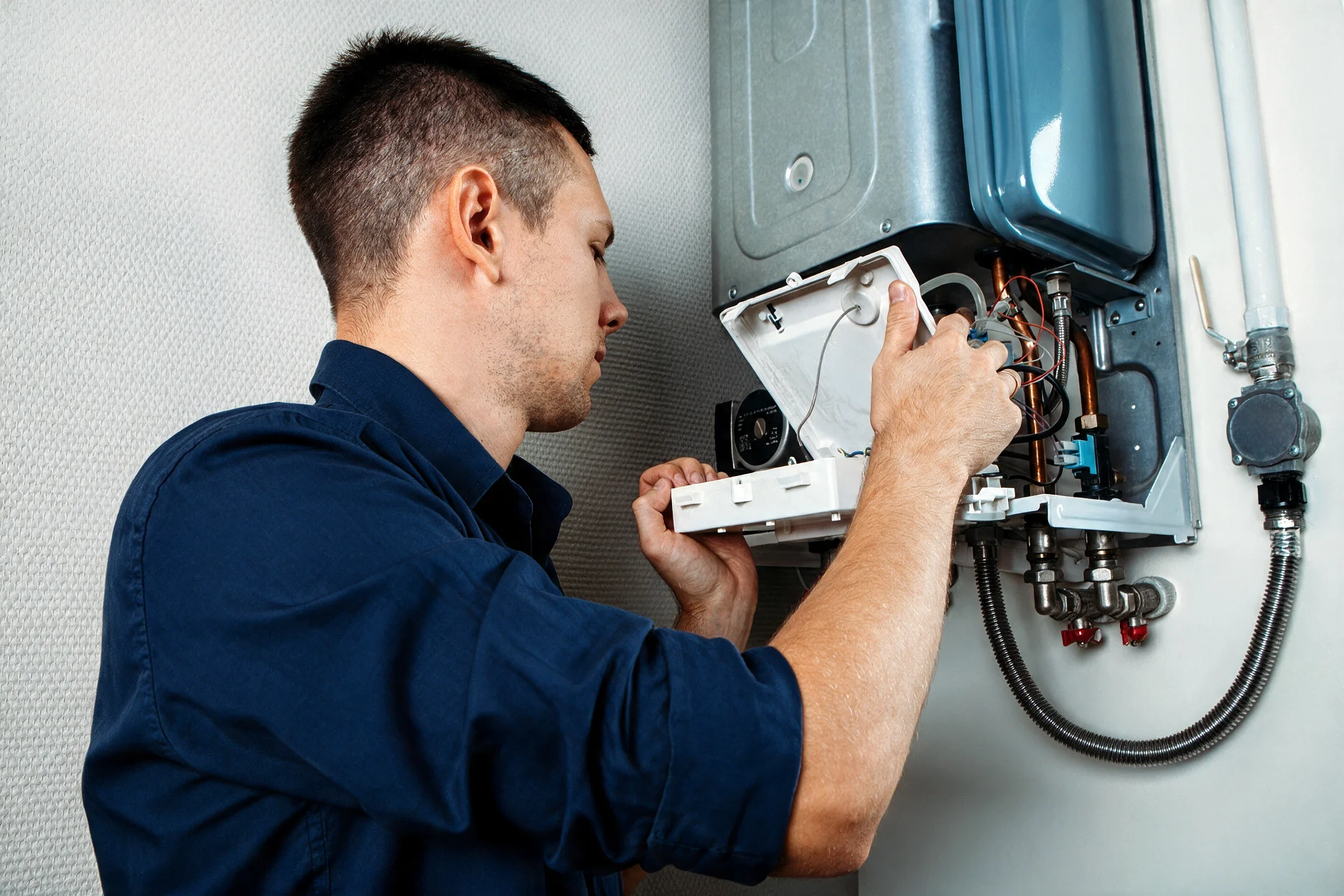
While some faults happen unexpectedly, many boiler issues provide warning signs before a complete failure occurs. Regular maintenance gives homeowners the opportunity to identify these signs early and take action before problems become more disruptive.
For homeowners in Cranbrook, keeping a heating system well maintained can provide greater confidence throughout the year, especially when temperatures drop and the boiler is working harder.
Introduction
Limescale can be an ongoing consideration for homeowners living with hard water. As water is heated, mineral deposits can form on relevant components, potentially affecting heat transfer and hot water performance over time.
When a boiler begins making unusual noises, takes longer to heat water or develops recurring faults, it can be difficult to know what action to take. Should you book a routine service, arrange a repair or start considering a replacement?
The answer depends on the actual condition of the appliance. Limescale may be involved, but similar symptoms can be caused by circulation issues, controls, pressure problems or component faults.
For homeowners in Paddock Wood, understanding the difference between these options can make it easier to arrange the right type of professional assessment.
Could Limescale Be Responsible for Your Boiler Problem?
Hard water contains dissolved minerals that can leave deposits when water is heated. Over time, scale may accumulate on components exposed to heated water.
Depending on the boiler and system, significant scale can contribute to:
- Reduced heat transfer
- Slower hot water production
- Kettling-type or rumbling noises
- Changes in hot water temperature
- Additional strain on certain components
- Reduced performance
However, these symptoms do not prove that limescale is the cause.
For example, a boiler that makes a new noise could have a scale-related issue, but circulation problems or a component fault could create a similar sound. Similarly, inconsistent hot water can have several possible explanations.
A professional diagnosis is therefore more useful than trying to identify the fault from one symptom.
What Are the Main Signs That a Boiler Needs Attention?
Boiler problems often develop gradually, although some faults can happen suddenly.
Pay attention to changes such as:
- New or increasingly loud noises
- Hot water taking longer to reach temperature
- Unusual temperature fluctuations
- Repeated boiler resets
- Frequent pressure changes
- Unexpected shutdowns
- Reduced heating performance
- Water leaking from the system
A single minor symptom does not necessarily mean the boiler needs replacing. It does, however, provide a reason to monitor the appliance and seek professional advice if the issue persists or worsens.
Why Is the Timing of the Appointment Important?
Leaving a developing fault until the boiler stops working completely can be inconvenient and, depending on the issue, may lead to more disruption.
On the other hand, not every unusual sound or performance change requires emergency attendance.
The sensible response depends on the symptom and its severity. A professional can help determine whether the situation is suitable for routine servicing, a planned repair or more urgent attention.
Should You Book a Boiler Service?
A service is generally a planned maintenance appointment rather than a substitute for repairing a known fault.
During boiler servicing Paddock Wood, homeowners can report changes they have noticed since the previous appointment. These details can help the engineer understand whether there is a developing issue that needs further investigation.
A service may be appropriate where:
- The boiler is operating normally but is due for maintenance
- You have noticed minor changes in performance
- You want the appliance condition checked
- You want to discuss recurring scale concerns
- There are no signs of an urgent fault
The appropriate servicing frequency depends on the appliance, manufacturer guidance and individual circumstances.
If the boiler has already stopped working or is showing a significant fault, a repair assessment may be more appropriate than simply booking a routine service.
When Is Boiler Repair More Appropriate?
Repair is generally the relevant option when a fault has been identified or the boiler is no longer operating as it should.
For homeowners considering boiler repair Paddock Wood, the first step is to establish what has actually failed.
An engineer may need to assess:
- Boiler fault codes
- Heating and hot water performance
- System pressure
- Relevant components
- Circulation
- Signs of scale
- Previous repairs
- Overall appliance condition
If a scale-related issue is identified, the appropriate repair will depend on which component is affected and the extent of the problem.
Repairing one component does not necessarily mean every other part of the boiler is in perfect condition. The age and wider history of the appliance can also influence the longer-term decision.
** If your boiler has developed a persistent fault, arranging a professional assessment can help establish whether repair is appropriate before you commit to replacement.**
When Should You Consider a New Boiler?
A new boiler should not be considered solely because limescale is present.
Replacement may become a relevant discussion when an appliance is older, has developed repeated faults or no longer meets the household’s heating and hot water requirements.
Other considerations can include:
- The boiler’s age
- Previous repair frequency
- Current condition
- Parts availability
- Ongoing reliability
- Efficiency considerations
- Suitability for the property
- Potential installation requirements
For homeowners researching boiler installation Paddock Wood, it is useful to consider the whole system rather than focusing only on the appliance.
The condition of existing pipework, heating controls, system configuration and water conditions may all be relevant when planning a replacement.
How Does Limescale Affect a New Boiler Decision?
The presence of hard water does not automatically mean that a new boiler will develop problems.
However, replacing the appliance does not change the property’s water conditions. If scale has contributed to problems with an existing system, it is reasonable to discuss whether suitable scale management should form part of the new installation plan.
The appropriate approach depends on:
- The water conditions
- The proposed boiler
- Manufacturer requirements
- Existing system configuration
- Hot water arrangements
- The type of scale protection available
There is no universal treatment that should automatically be installed in every property.
Instead, the installer should consider whether a particular measure is relevant to the individual system.
What Should Be Checked Before a New Boiler Is Installed?
A replacement installation can be an opportunity to review more than the old appliance.
| Area to consider | Why it matters |
|---|---|
| Existing boiler | Helps establish why replacement is being considered |
| Heating system | Identifies wider issues that may need attention |
| Pipework | Can influence installation requirements |
| Water pressure | Relevant to hot water and system performance |
| Hot water demand | Helps determine suitable system configuration |
| Water conditions | May make scale management worth discussing |
| Controls | Can affect how the new system is operated |
| Boiler location | May influence installation work |
The exact checks will vary depending on the property and proposed system.
Can Limescale Make a Boiler Less Efficient?
It can contribute to reduced heat transfer in affected components, which may influence performance. The extent of any effect depends on the amount of scale, the component involved and the overall system condition.
It is important not to assume that a boiler’s energy performance has declined simply because scale is present.
Other factors can have a significant influence, including:
- Boiler age
- System pressure
- Controls
- Circulation
- Component condition
- Heating demand
- System maintenance
A professional assessment can help distinguish between a scale-related issue and another reason for poor performance.
Is Boiler Servicing Enough If There Is Already a Fault?
Not necessarily.
A service and a repair have different purposes. If an appliance has a known fault, simply carrying out routine servicing may not resolve it.
For example, if the boiler repeatedly shuts down, loses pressure or fails to provide hot water, the cause needs to be investigated.
A service may identify a concern, but additional repair work may be necessary.
Conversely, if the boiler is operating normally and the homeowner simply wants routine maintenance, a service may be entirely appropriate.
The important distinction is whether the appliance is showing a fault or is simply due for scheduled maintenance.
What Should You Tell the Engineer Before the Appointment?
A clear description of the problem can make the assessment more useful.
Before booking, consider making a note of:
- When the problem started
- What the boiler was doing when it occurred
- Whether heating is affected
- Whether hot water is affected
- Any displayed fault code
- Whether the problem is intermittent
- Whether the boiler makes an unusual noise
- Whether pressure changes occur
- Whether there has been recent repair or maintenance work
Avoid attempting to dismantle or repair the boiler yourself.
Gas appliances should only be worked on by appropriately qualified professionals.
Can Scale Problems Be Prevented Completely?
No. Where hard water is present, it is not realistic to assume that a boiler will never encounter scale.
However, homeowners can take sensible steps to monitor system performance and discuss appropriate maintenance.
Keep Up With Appropriate Servicing
Following the manufacturer’s servicing recommendations can help identify developing problems.
Report New Symptoms
If the boiler starts behaving differently, mention the change rather than assuming it will disappear.
Discuss Water Conditions
If scale has previously been a recurring issue, ask whether water conditions should be considered when maintaining or replacing the system.
Avoid Unnecessary DIY Treatment
Using an unsuitable chemical or attempting to access internal boiler components can create additional risks. Scale management should be appropriate to the particular system.
** If scale has repeatedly been mentioned during previous boiler appointments, discuss the underlying water conditions with a qualified heating professional rather than treating each symptom separately.**
What If Your Boiler Suddenly Stops Working?
A complete loss of heating or hot water can be particularly disruptive, especially during colder weather.
The appropriate response depends on the circumstances. Check simple user-accessible factors where safe and appropriate, such as whether the boiler displays an error code or whether the controls are operating as expected.
Do not attempt to open the boiler or interfere with gas components.
If there is a suspected gas leak, carbon monoxide alarm or significant water leak, follow the appropriate emergency safety guidance and seek urgent professional assistance.
A complete operational failure without an obvious safety issue may still require prompt repair, but it is not necessarily evidence that limescale has caused the problem.
A Typical Paddock Wood Example
Imagine a homeowner notices that their boiler has gradually become louder when producing hot water.
Initially, the heating and hot water continue to work, so they make a note of the noise but do not arrange an appointment.
Several months later, the hot water becomes inconsistent and the boiler occasionally shuts down.
At this stage, it would be unhelpful to assume that limescale is definitely responsible. A professional assessment could identify scale, a circulation problem, a component fault or several contributing factors.
If the boiler is in reasonable condition and the fault is repairable, repair may be appropriate. If the appliance is older and has a history of repeated failures, replacement may need to be considered.
The important decision is based on the condition of the complete appliance, not simply the presence of limescale.
Frequently Asked Questions
Related articles

Which fuel powers your boiler?
Mains Gas

LPG

Other
At a glance
While some faults happen unexpectedly, many boiler issues provide warning signs before a complete failure occurs. Regular maintenance gives homeowners the opportunity to identify these signs early and take action before problems become more disruptive.
For homeowners in Cranbrook, keeping a heating system well maintained can provide greater confidence throughout the year, especially when temperatures drop and the boiler is working harder.
Introduction
Limescale can be an ongoing consideration for homeowners living with hard water. As water is heated, mineral deposits can form on relevant components, potentially affecting heat transfer and hot water performance over time.
When a boiler begins making unusual noises, takes longer to heat water or develops recurring faults, it can be difficult to know what action to take. Should you book a routine service, arrange a repair or start considering a replacement?
The answer depends on the actual condition of the appliance. Limescale may be involved, but similar symptoms can be caused by circulation issues, controls, pressure problems or component faults.
For homeowners in Paddock Wood, understanding the difference between these options can make it easier to arrange the right type of professional assessment.
Could Limescale Be Responsible for Your Boiler Problem?
Hard water contains dissolved minerals that can leave deposits when water is heated. Over time, scale may accumulate on components exposed to heated water.
Depending on the boiler and system, significant scale can contribute to:
- Reduced heat transfer
- Slower hot water production
- Kettling-type or rumbling noises
- Changes in hot water temperature
- Additional strain on certain components
- Reduced performance
However, these symptoms do not prove that limescale is the cause.
For example, a boiler that makes a new noise could have a scale-related issue, but circulation problems or a component fault could create a similar sound. Similarly, inconsistent hot water can have several possible explanations.
A professional diagnosis is therefore more useful than trying to identify the fault from one symptom.
What Are the Main Signs That a Boiler Needs Attention?
Boiler problems often develop gradually, although some faults can happen suddenly.
Pay attention to changes such as:
- New or increasingly loud noises
- Hot water taking longer to reach temperature
- Unusual temperature fluctuations
- Repeated boiler resets
- Frequent pressure changes
- Unexpected shutdowns
- Reduced heating performance
- Water leaking from the system
A single minor symptom does not necessarily mean the boiler needs replacing. It does, however, provide a reason to monitor the appliance and seek professional advice if the issue persists or worsens.
Why Is the Timing of the Appointment Important?
Leaving a developing fault until the boiler stops working completely can be inconvenient and, depending on the issue, may lead to more disruption.
On the other hand, not every unusual sound or performance change requires emergency attendance.
The sensible response depends on the symptom and its severity. A professional can help determine whether the situation is suitable for routine servicing, a planned repair or more urgent attention.
Should You Book a Boiler Service?
A service is generally a planned maintenance appointment rather than a substitute for repairing a known fault.
During boiler servicing Paddock Wood, homeowners can report changes they have noticed since the previous appointment. These details can help the engineer understand whether there is a developing issue that needs further investigation.
A service may be appropriate where:
- The boiler is operating normally but is due for maintenance
- You have noticed minor changes in performance
- You want the appliance condition checked
- You want to discuss recurring scale concerns
- There are no signs of an urgent fault
The appropriate servicing frequency depends on the appliance, manufacturer guidance and individual circumstances.
If the boiler has already stopped working or is showing a significant fault, a repair assessment may be more appropriate than simply booking a routine service.
When Is Boiler Repair More Appropriate?
Repair is generally the relevant option when a fault has been identified or the boiler is no longer operating as it should.
For homeowners considering boiler repair Paddock Wood, the first step is to establish what has actually failed.
An engineer may need to assess:
- Boiler fault codes
- Heating and hot water performance
- System pressure
- Relevant components
- Circulation
- Signs of scale
- Previous repairs
- Overall appliance condition
If a scale-related issue is identified, the appropriate repair will depend on which component is affected and the extent of the problem.
Repairing one component does not necessarily mean every other part of the boiler is in perfect condition. The age and wider history of the appliance can also influence the longer-term decision.
** If your boiler has developed a persistent fault, arranging a professional assessment can help establish whether repair is appropriate before you commit to replacement.**
When Should You Consider a New Boiler?
A new boiler should not be considered solely because limescale is present.
Replacement may become a relevant discussion when an appliance is older, has developed repeated faults or no longer meets the household’s heating and hot water requirements.
Other considerations can include:
- The boiler’s age
- Previous repair frequency
- Current condition
- Parts availability
- Ongoing reliability
- Efficiency considerations
- Suitability for the property
- Potential installation requirements
For homeowners researching boiler installation Paddock Wood, it is useful to consider the whole system rather than focusing only on the appliance.
The condition of existing pipework, heating controls, system configuration and water conditions may all be relevant when planning a replacement.
How Does Limescale Affect a New Boiler Decision?
The presence of hard water does not automatically mean that a new boiler will develop problems.
However, replacing the appliance does not change the property’s water conditions. If scale has contributed to problems with an existing system, it is reasonable to discuss whether suitable scale management should form part of the new installation plan.
The appropriate approach depends on:
- The water conditions
- The proposed boiler
- Manufacturer requirements
- Existing system configuration
- Hot water arrangements
- The type of scale protection available
There is no universal treatment that should automatically be installed in every property.
Instead, the installer should consider whether a particular measure is relevant to the individual system.
What Should Be Checked Before a New Boiler Is Installed?
A replacement installation can be an opportunity to review more than the old appliance.
| Area to consider | Why it matters |
|---|---|
| Existing boiler | Helps establish why replacement is being considered |
| Heating system | Identifies wider issues that may need attention |
| Pipework | Can influence installation requirements |
| Water pressure | Relevant to hot water and system performance |
| Hot water demand | Helps determine suitable system configuration |
| Water conditions | May make scale management worth discussing |
| Controls | Can affect how the new system is operated |
| Boiler location | May influence installation work |
The exact checks will vary depending on the property and proposed system.
Can Limescale Make a Boiler Less Efficient?
It can contribute to reduced heat transfer in affected components, which may influence performance. The extent of any effect depends on the amount of scale, the component involved and the overall system condition.
It is important not to assume that a boiler’s energy performance has declined simply because scale is present.
Other factors can have a significant influence, including:
- Boiler age
- System pressure
- Controls
- Circulation
- Component condition
- Heating demand
- System maintenance
A professional assessment can help distinguish between a scale-related issue and another reason for poor performance.
Is Boiler Servicing Enough If There Is Already a Fault?
Not necessarily.
A service and a repair have different purposes. If an appliance has a known fault, simply carrying out routine servicing may not resolve it.
For example, if the boiler repeatedly shuts down, loses pressure or fails to provide hot water, the cause needs to be investigated.
A service may identify a concern, but additional repair work may be necessary.
Conversely, if the boiler is operating normally and the homeowner simply wants routine maintenance, a service may be entirely appropriate.
The important distinction is whether the appliance is showing a fault or is simply due for scheduled maintenance.
What Should You Tell the Engineer Before the Appointment?
A clear description of the problem can make the assessment more useful.
Before booking, consider making a note of:
- When the problem started
- What the boiler was doing when it occurred
- Whether heating is affected
- Whether hot water is affected
- Any displayed fault code
- Whether the problem is intermittent
- Whether the boiler makes an unusual noise
- Whether pressure changes occur
- Whether there has been recent repair or maintenance work
Avoid attempting to dismantle or repair the boiler yourself.
Gas appliances should only be worked on by appropriately qualified professionals.
Can Scale Problems Be Prevented Completely?
No. Where hard water is present, it is not realistic to assume that a boiler will never encounter scale.
However, homeowners can take sensible steps to monitor system performance and discuss appropriate maintenance.
Keep Up With Appropriate Servicing
Following the manufacturer’s servicing recommendations can help identify developing problems.
Report New Symptoms
If the boiler starts behaving differently, mention the change rather than assuming it will disappear.
Discuss Water Conditions
If scale has previously been a recurring issue, ask whether water conditions should be considered when maintaining or replacing the system.
Avoid Unnecessary DIY Treatment
Using an unsuitable chemical or attempting to access internal boiler components can create additional risks. Scale management should be appropriate to the particular system.
** If scale has repeatedly been mentioned during previous boiler appointments, discuss the underlying water conditions with a qualified heating professional rather than treating each symptom separately.**
What If Your Boiler Suddenly Stops Working?
A complete loss of heating or hot water can be particularly disruptive, especially during colder weather.
The appropriate response depends on the circumstances. Check simple user-accessible factors where safe and appropriate, such as whether the boiler displays an error code or whether the controls are operating as expected.
Do not attempt to open the boiler or interfere with gas components.
If there is a suspected gas leak, carbon monoxide alarm or significant water leak, follow the appropriate emergency safety guidance and seek urgent professional assistance.
A complete operational failure without an obvious safety issue may still require prompt repair, but it is not necessarily evidence that limescale has caused the problem.
A Typical Paddock Wood Example
Imagine a homeowner notices that their boiler has gradually become louder when producing hot water.
Initially, the heating and hot water continue to work, so they make a note of the noise but do not arrange an appointment.
Several months later, the hot water becomes inconsistent and the boiler occasionally shuts down.
At this stage, it would be unhelpful to assume that limescale is definitely responsible. A professional assessment could identify scale, a circulation problem, a component fault or several contributing factors.
If the boiler is in reasonable condition and the fault is repairable, repair may be appropriate. If the appliance is older and has a history of repeated failures, replacement may need to be considered.
The important decision is based on the condition of the complete appliance, not simply the presence of limescale.
Frequently Asked Questions
Related articles
Which fuel powers your boiler?
Mains Gas
LPG
Other