Tunbridge Wells Bathroom Planning: Layout, Budget and Finish Decisions to Make Early
Planning a new bathroom is exciting, but it can also be hard to understand why prices vary so much from one quote to another. One bathroom might need a simple refresh, while another may involve layout changes, plumbing alterations, new electrics, tiling, flooring and specialist finishing work.

Why you can trust our content
We understand that the boiler industry can be confusing, with plenty of outdated or misleading information. That’s why we rely only on trusted, proven sources to guide our advice and installations:






At a glance
That is why homeowners considering bathroom installation Tunbridge Wells should look beyond the headline price. The final cost depends on the size of the room, the condition of the existing bathroom, the quality of materials chosen and how much behind-the-scenes work is needed to achieve the finish you want.
In this guide, we will break down the main factors that affect price, so you can plan your budget with more confidence and avoid surprise extras later.
If you are planning a bathroom project, contact Kentish Plumbers for tailored advice and a clear installation quote.
Why do bathroom installation prices vary so much?
Bathroom projects vary because every home starts from a different point. A like-for-like replacement, where the toilet, basin, bath or shower stay in the same positions, is usually simpler than a full redesign where plumbing and waste pipes need to be moved.
The quote can also change depending on the condition of the existing room. If the walls are uneven, the floor needs strengthening, the pipework is old, or hidden leaks are discovered, the installation may need more preparation before the visible work begins.
A realistic bathroom cost Tunbridge Wells quote should consider both the finished look and the practical work required underneath. The tiles, taps and shower screen matter, but so do waterproofing, pipework, ventilation and safe electrical work.
What are the biggest factors that change the final price?
The final price is usually shaped by a mixture of design choices and technical requirements. Some costs are easy to see, such as sanitaryware and tiles. Others are less obvious but just as important.
|
Cost factor |
Why it affects the price |
|
Room size |
Larger bathrooms usually need more materials and labour |
|
Layout changes |
Moving toilets, showers or basins can increase plumbing work |
|
Plumbing condition |
Old or awkward pipework may need replacing or adapting |
|
Tiling area |
Full-height tiling costs more than part-tiled walls |
|
Flooring |
Waterproof flooring, levelling and preparation can affect cost |
|
Electrical work |
Lighting, extractor fans and shaver points must be installed safely |
|
Fixtures and fittings |
Higher-spec products can increase the total budget |
|
Waterproofing |
Wet areas need proper protection to prevent leaks |
|
Waste removal |
Old suites, tiles and rubble need to be removed responsibly |
The important thing is not to choose the cheapest quote automatically. It is to understand what is included, what is excluded and whether the installer has allowed for the work your bathroom genuinely needs.
Does changing the layout increase the cost?
Yes, changing the layout often increases the cost because it usually means altering pipework, waste routes and sometimes flooring or walls. Moving a basin may be fairly straightforward. Moving a toilet, bath or shower can be more involved because waste pipes need to fall correctly and connect safely.
A layout change may be worth it if it improves how the room works. For example, replacing a bath with a walk-in shower can make the space more practical, while moving storage or sanitaryware may make a small bathroom feel bigger.
However, it is worth knowing that the more you move, the more labour is usually required. This is where a detailed survey helps. A good installer can explain whether your preferred layout is practical, what extra work it creates and whether there is a more cost-effective way to achieve a similar result.
How much do fixtures and finishes affect the budget?
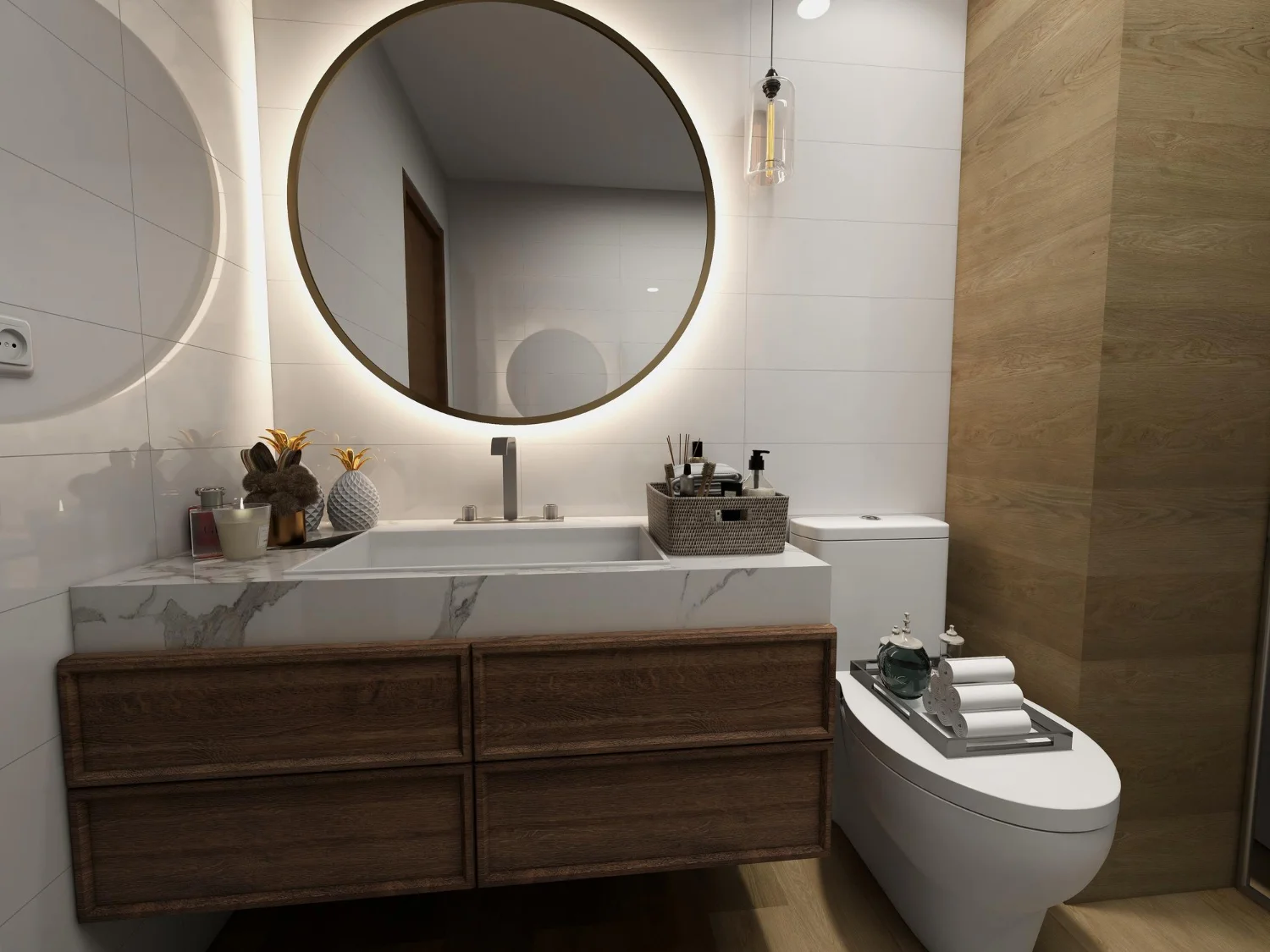
Fixtures and finishes can make a major difference to the final price. Two bathrooms can have the same layout but very different costs because the products chosen are different.
Common choices that affect the budget include:
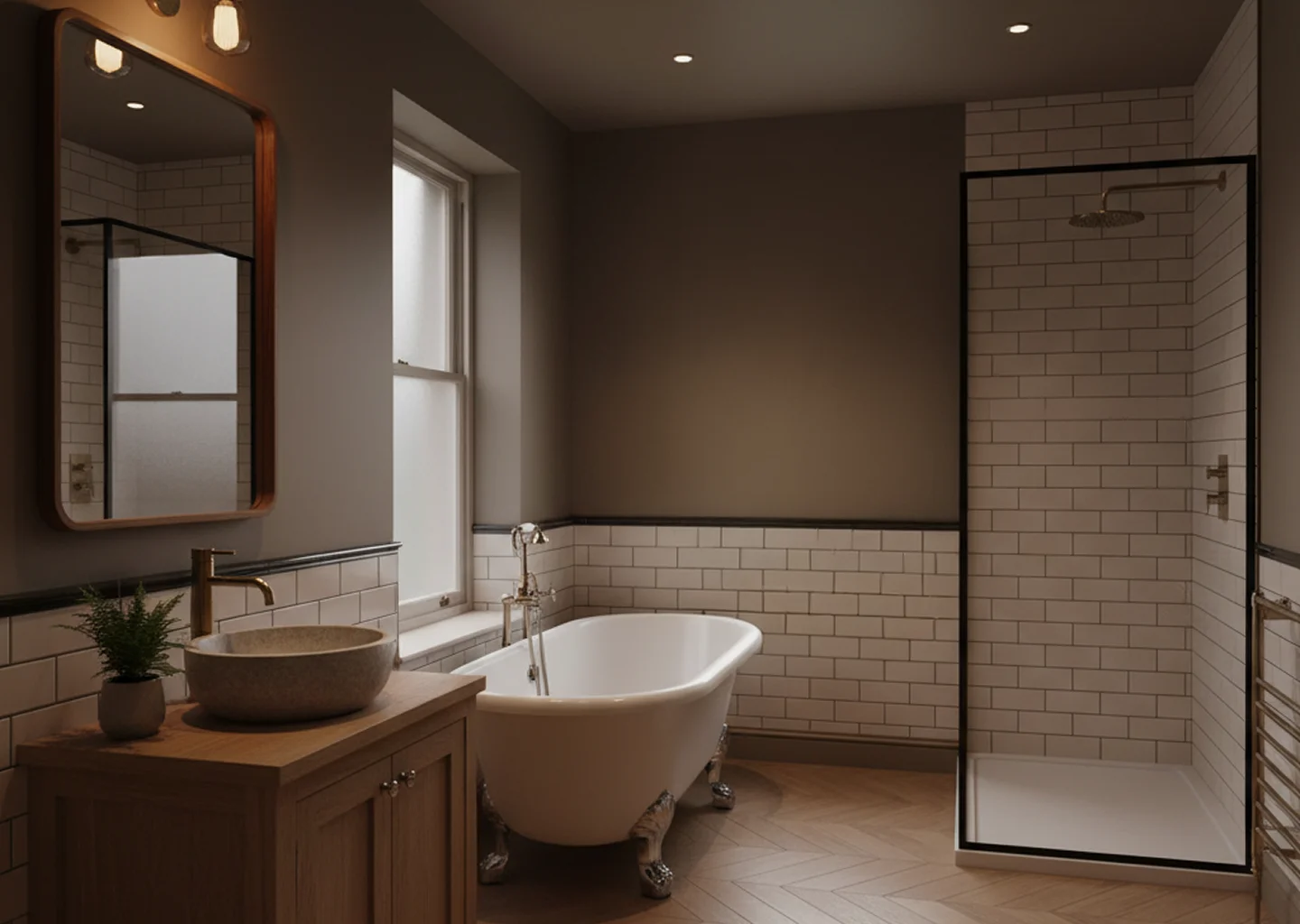
- Standard bath vs freestanding bath
- Basic shower mixer vs premium concealed shower
- Ceramic tiles vs porcelain or natural stone
- Standard basin vs vanity unit with storage
- Simple mirror vs LED heated mirror
- Budget taps vs higher-end brassware
- Standard radiator vs towel rail
- Vinyl flooring vs tiled floor
It is easy to focus on the visible finish, but the quality of installation is just as important. Expensive tiles or fixtures will not perform well if the preparation, waterproofing and fitting are poor.
For bathroom installation Tunbridge Wells, it is usually best to agree a realistic finish level early. That way, the quote can be built around the products and standard of finish you actually want.
Speak to Kentish Plumbers if you would like help planning a bathroom layout, finish level and installation budget.
Why does tiling make such a difference?
Tiling can be one of the biggest labour elements in a bathroom project. The cost depends on the size of the area, the type of tiles, the pattern, the preparation required and the complexity of the room.
Large tiles may look simple, but they can be harder to handle and cut. Small tiles, mosaics or patterned layouts can take longer because more detail is involved. Uneven walls may also need preparing before tiling begins, which can add time and materials.
The amount of tiling matters too. A fully tiled bathroom will usually cost more than a room with tiled wet areas and painted walls elsewhere.
A good quote should make clear:
- Which walls are being tiled
- Whether the floor is being tiled
- Whether walls need preparation
- What tile pattern is being used
- Whether trims, grout and adhesive are included
- Whether waterproofing is included in wet areas
These details help prevent misunderstandings once the project starts.
Can hidden issues change the bathroom cost?
Yes, hidden issues can change the final price, especially in older bathrooms. Some problems are only visible once the old suite, tiles or flooring are removed.
Possible hidden issues include:
- Water-damaged flooring
- Rotten timber around baths or showers
- Leaking pipework behind walls
- Poor previous plumbing work
- Inadequate ventilation
- Uneven walls or floors
- Old electrics that need updating
A professional installer should discuss possible risks before work begins. Not every project will uncover problems, but it is sensible to have a contingency in your budget.
This is especially important when comparing quotes. A very low quote may not allow for preparation, protection or remedial work. That can make it look attractive at first, but less reliable once the room is stripped out.
Example scenario: a tired family bathroom needing a practical upgrade
A common situation is a homeowner with an older family bathroom that still works, but feels dated and awkward. The bath panel may be worn, the shower pressure may feel poor, storage may be limited and the tiles may be difficult to keep clean.
At first, the project can seem like a simple replacement. But once the installer looks closer, the best result may involve improving ventilation, replacing old pipework, changing the shower setup and adding better storage.
In this kind of project, the final cost is not just about choosing a new suite. It is about making the bathroom easier to use, safer, better protected against moisture and more suitable for everyday life.
What should a bathroom quote include?
A clear quote should show what is included in the work, rather than leaving you to guess. This makes it easier to compare installers fairly.
A good bathroom quote should usually include:
- Removal of the existing suite
- Plumbing alterations
- Installation of the new bath, shower, toilet and basin
- Tiling or wall panel work
- Flooring details
- Electrical work, where required
- Extractor fan or ventilation work
- Waterproofing in wet areas
- Waste removal
- Labour and project timescale
- Any exclusions or optional extras
When reviewing bathroom cost Tunbridge Wells quotes, look closely at the scope. If one quote includes preparation, waterproofing and waste removal while another does not, they are not truly like-for-like.
How can you keep your bathroom project on budget?
The best way to control the budget is to make decisions early. Changing products, layout or tile choices once work has started can delay the project and increase costs.
Before requesting a quote, it helps to think about:
- Whether the layout is staying the same
- Whether you want a bath, shower or both
- Your preferred tiling style
- Storage requirements
- Lighting and mirror choices
- Ventilation
- Flooring
- Whether you want a budget, mid-range or premium finish
You do not need every answer straight away, but the clearer the brief, the more accurate the quote is likely to be.
FAQs
The final cost of a bathroom project depends on much more than the suite you choose. Layout, plumbing, tiling, flooring, ventilation, waterproofing and hidden preparation work can all affect the price.
For homeowners planning bathrooms Tunbridge Wells, the safest approach is to work with an experienced team that can explain the options clearly and build the quote around your property, your priorities and your budget.
Kentish Plumbers can help you plan a practical, well-finished bathroom with clear advice from the start.
Contact Kentish Plumbers to discuss your bathroom installation and request a tailored quote.
Related articles

At a glance
That is why homeowners considering bathroom installation Tunbridge Wells should look beyond the headline price. The final cost depends on the size of the room, the condition of the existing bathroom, the quality of materials chosen and how much behind-the-scenes work is needed to achieve the finish you want.
In this guide, we will break down the main factors that affect price, so you can plan your budget with more confidence and avoid surprise extras later.
If you are planning a bathroom project, contact Kentish Plumbers for tailored advice and a clear installation quote.
Why do bathroom installation prices vary so much?
Bathroom projects vary because every home starts from a different point. A like-for-like replacement, where the toilet, basin, bath or shower stay in the same positions, is usually simpler than a full redesign where plumbing and waste pipes need to be moved.
The quote can also change depending on the condition of the existing room. If the walls are uneven, the floor needs strengthening, the pipework is old, or hidden leaks are discovered, the installation may need more preparation before the visible work begins.
A realistic bathroom cost Tunbridge Wells quote should consider both the finished look and the practical work required underneath. The tiles, taps and shower screen matter, but so do waterproofing, pipework, ventilation and safe electrical work.
What are the biggest factors that change the final price?
The final price is usually shaped by a mixture of design choices and technical requirements. Some costs are easy to see, such as sanitaryware and tiles. Others are less obvious but just as important.
|
Cost factor |
Why it affects the price |
|
Room size |
Larger bathrooms usually need more materials and labour |
|
Layout changes |
Moving toilets, showers or basins can increase plumbing work |
|
Plumbing condition |
Old or awkward pipework may need replacing or adapting |
|
Tiling area |
Full-height tiling costs more than part-tiled walls |
|
Flooring |
Waterproof flooring, levelling and preparation can affect cost |
|
Electrical work |
Lighting, extractor fans and shaver points must be installed safely |
|
Fixtures and fittings |
Higher-spec products can increase the total budget |
|
Waterproofing |
Wet areas need proper protection to prevent leaks |
|
Waste removal |
Old suites, tiles and rubble need to be removed responsibly |
The important thing is not to choose the cheapest quote automatically. It is to understand what is included, what is excluded and whether the installer has allowed for the work your bathroom genuinely needs.
Does changing the layout increase the cost?
Yes, changing the layout often increases the cost because it usually means altering pipework, waste routes and sometimes flooring or walls. Moving a basin may be fairly straightforward. Moving a toilet, bath or shower can be more involved because waste pipes need to fall correctly and connect safely.
A layout change may be worth it if it improves how the room works. For example, replacing a bath with a walk-in shower can make the space more practical, while moving storage or sanitaryware may make a small bathroom feel bigger.
However, it is worth knowing that the more you move, the more labour is usually required. This is where a detailed survey helps. A good installer can explain whether your preferred layout is practical, what extra work it creates and whether there is a more cost-effective way to achieve a similar result.
How much do fixtures and finishes affect the budget?
Fixtures and finishes can make a major difference to the final price. Two bathrooms can have the same layout but very different costs because the products chosen are different.
Common choices that affect the budget include:
- Standard bath vs freestanding bath
- Basic shower mixer vs premium concealed shower
- Ceramic tiles vs porcelain or natural stone
- Standard basin vs vanity unit with storage
- Simple mirror vs LED heated mirror
- Budget taps vs higher-end brassware
- Standard radiator vs towel rail
- Vinyl flooring vs tiled floor
It is easy to focus on the visible finish, but the quality of installation is just as important. Expensive tiles or fixtures will not perform well if the preparation, waterproofing and fitting are poor.
For bathroom installation Tunbridge Wells, it is usually best to agree a realistic finish level early. That way, the quote can be built around the products and standard of finish you actually want.
Speak to Kentish Plumbers if you would like help planning a bathroom layout, finish level and installation budget.
Why does tiling make such a difference?
Tiling can be one of the biggest labour elements in a bathroom project. The cost depends on the size of the area, the type of tiles, the pattern, the preparation required and the complexity of the room.
Large tiles may look simple, but they can be harder to handle and cut. Small tiles, mosaics or patterned layouts can take longer because more detail is involved. Uneven walls may also need preparing before tiling begins, which can add time and materials.
The amount of tiling matters too. A fully tiled bathroom will usually cost more than a room with tiled wet areas and painted walls elsewhere.
A good quote should make clear:
- Which walls are being tiled
- Whether the floor is being tiled
- Whether walls need preparation
- What tile pattern is being used
- Whether trims, grout and adhesive are included
- Whether waterproofing is included in wet areas
These details help prevent misunderstandings once the project starts.
Can hidden issues change the bathroom cost?
Yes, hidden issues can change the final price, especially in older bathrooms. Some problems are only visible once the old suite, tiles or flooring are removed.
Possible hidden issues include:
- Water-damaged flooring
- Rotten timber around baths or showers
- Leaking pipework behind walls
- Poor previous plumbing work
- Inadequate ventilation
- Uneven walls or floors
- Old electrics that need updating
A professional installer should discuss possible risks before work begins. Not every project will uncover problems, but it is sensible to have a contingency in your budget.
This is especially important when comparing quotes. A very low quote may not allow for preparation, protection or remedial work. That can make it look attractive at first, but less reliable once the room is stripped out.
Example scenario: a tired family bathroom needing a practical upgrade
A common situation is a homeowner with an older family bathroom that still works, but feels dated and awkward. The bath panel may be worn, the shower pressure may feel poor, storage may be limited and the tiles may be difficult to keep clean.
At first, the project can seem like a simple replacement. But once the installer looks closer, the best result may involve improving ventilation, replacing old pipework, changing the shower setup and adding better storage.
In this kind of project, the final cost is not just about choosing a new suite. It is about making the bathroom easier to use, safer, better protected against moisture and more suitable for everyday life.
What should a bathroom quote include?
A clear quote should show what is included in the work, rather than leaving you to guess. This makes it easier to compare installers fairly.
A good bathroom quote should usually include:
- Removal of the existing suite
- Plumbing alterations
- Installation of the new bath, shower, toilet and basin
- Tiling or wall panel work
- Flooring details
- Electrical work, where required
- Extractor fan or ventilation work
- Waterproofing in wet areas
- Waste removal
- Labour and project timescale
- Any exclusions or optional extras
When reviewing bathroom cost Tunbridge Wells quotes, look closely at the scope. If one quote includes preparation, waterproofing and waste removal while another does not, they are not truly like-for-like.
How can you keep your bathroom project on budget?
The best way to control the budget is to make decisions early. Changing products, layout or tile choices once work has started can delay the project and increase costs.
Before requesting a quote, it helps to think about:
- Whether the layout is staying the same
- Whether you want a bath, shower or both
- Your preferred tiling style
- Storage requirements
- Lighting and mirror choices
- Ventilation
- Flooring
- Whether you want a budget, mid-range or premium finish
You do not need every answer straight away, but the clearer the brief, the more accurate the quote is likely to be.
FAQs
The final cost of a bathroom project depends on much more than the suite you choose. Layout, plumbing, tiling, flooring, ventilation, waterproofing and hidden preparation work can all affect the price.
For homeowners planning bathrooms Tunbridge Wells, the safest approach is to work with an experienced team that can explain the options clearly and build the quote around your property, your priorities and your budget.
Kentish Plumbers can help you plan a practical, well-finished bathroom with clear advice from the start.
Contact Kentish Plumbers to discuss your bathroom installation and request a tailored quote.