
New Boiler Cost Tonbridge: When Limescale Damage Changes the Repair-or-Replace Decision
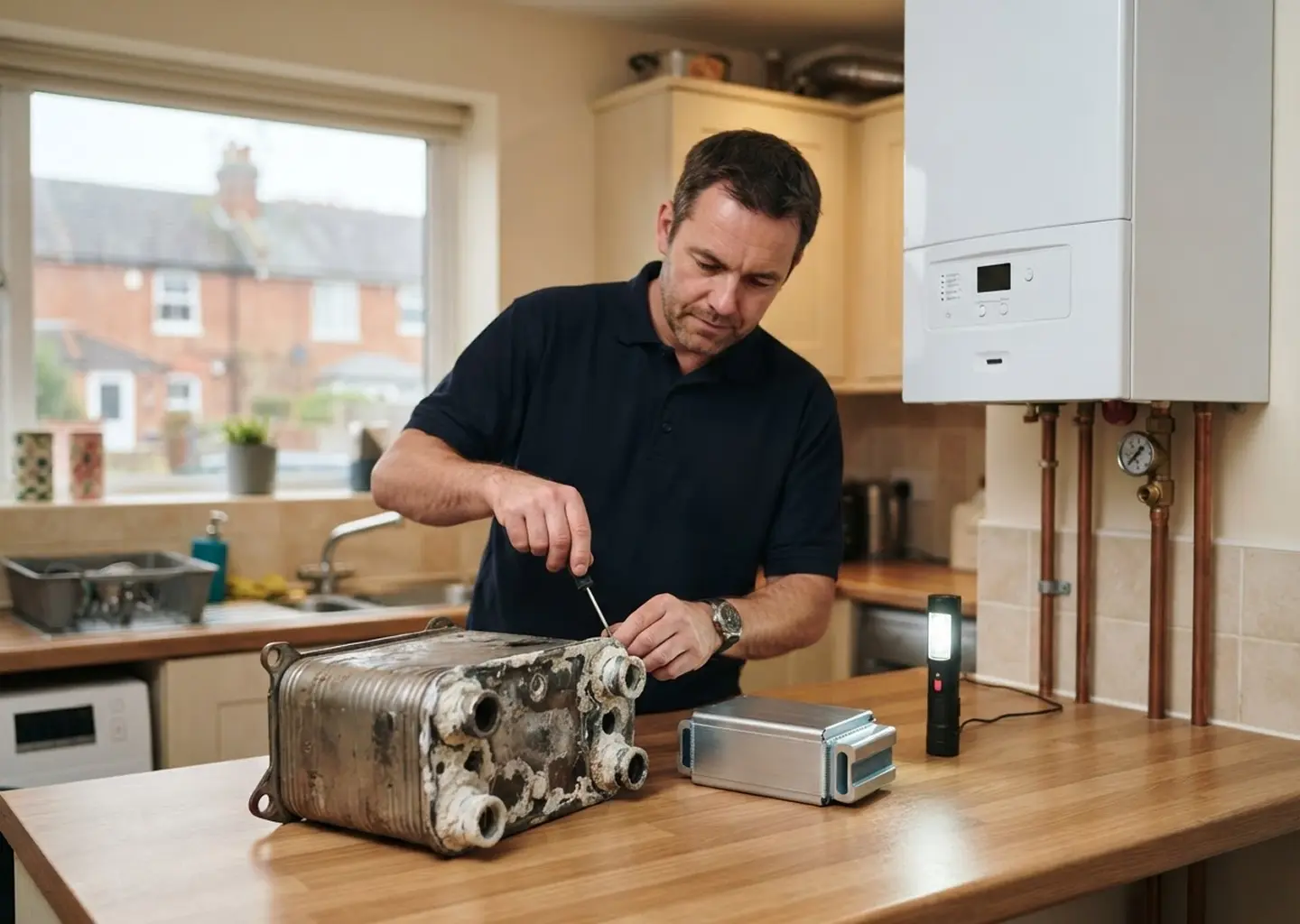
Limescale is usually noticed around taps, shower screens and kettles, but the same mineral deposits can become relevant inside parts of a heating and hot water system. For homeowners in Tonbridge, this can create an awkward question when a boiler starts showing signs of trouble: should the existing appliance be repaired, or is it time to consider a replacement?

Why you can trust our content
We understand that the boiler industry can be confusing, with plenty of outdated or misleading information. That’s why we rely only on trusted, proven sources to guide our advice and installations:






At a glance
There is no single answer based on limescale alone. The condition and age of the boiler, the nature of the fault, the cost of the repair and the likely future reliability of the appliance all need to be considered together.
Understanding these factors can make a costly heating decision much clearer. Rather than assuming that scale means a boiler has reached the end of its life, homeowners can look at the evidence and decide what level of work makes practical sense.
Can limescale make boiler repairs more expensive?
Potentially, although the effect depends on which components are affected and how extensive the problem is. Limescale can interfere with heat transfer and water flow, particularly within components involved in producing domestic hot water.
A simple fault may have a relatively straightforward solution, while a heavily affected component may require more extensive work. The presence of scale can also be a contributing factor rather than the direct cause of a breakdown.
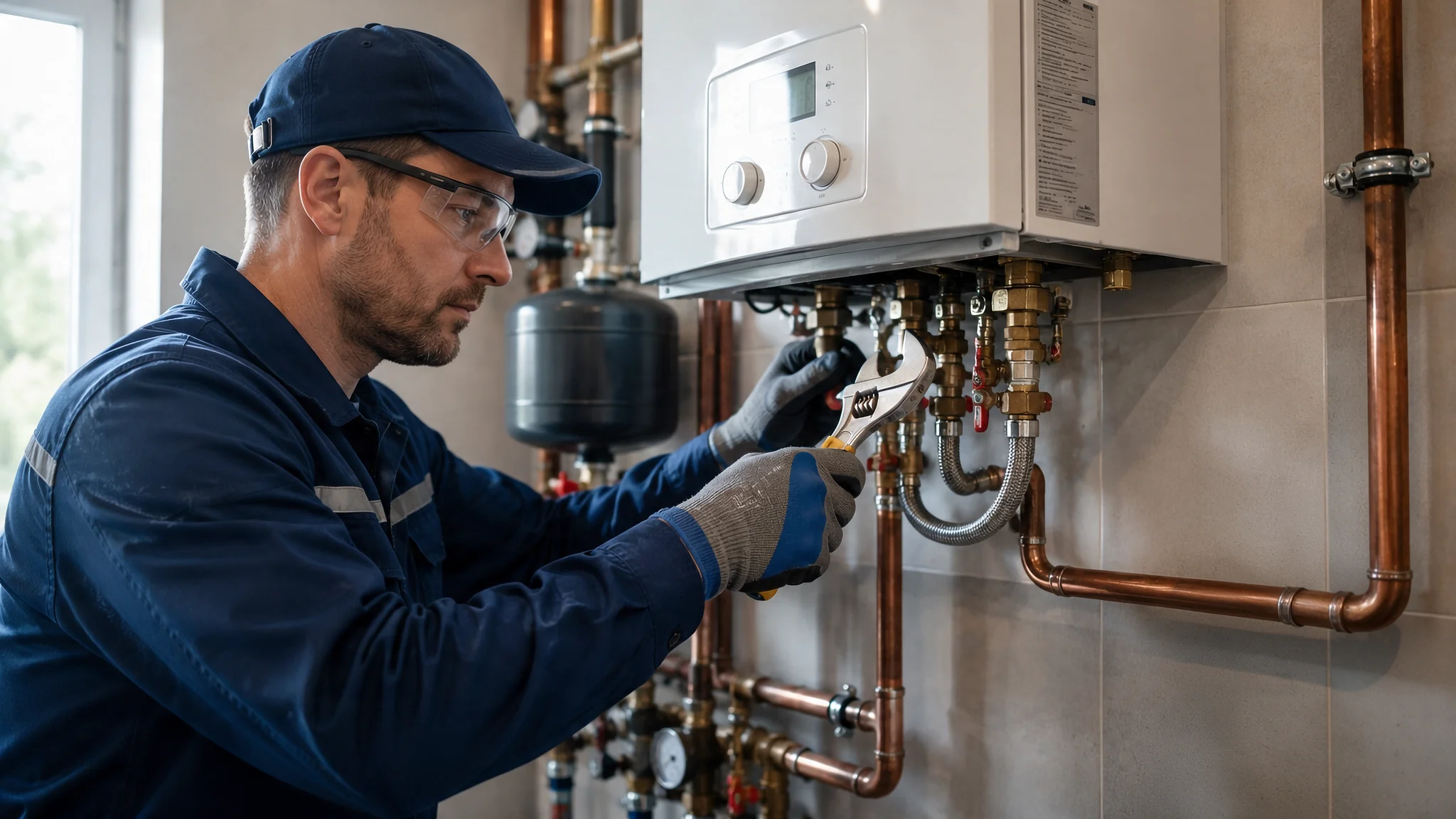
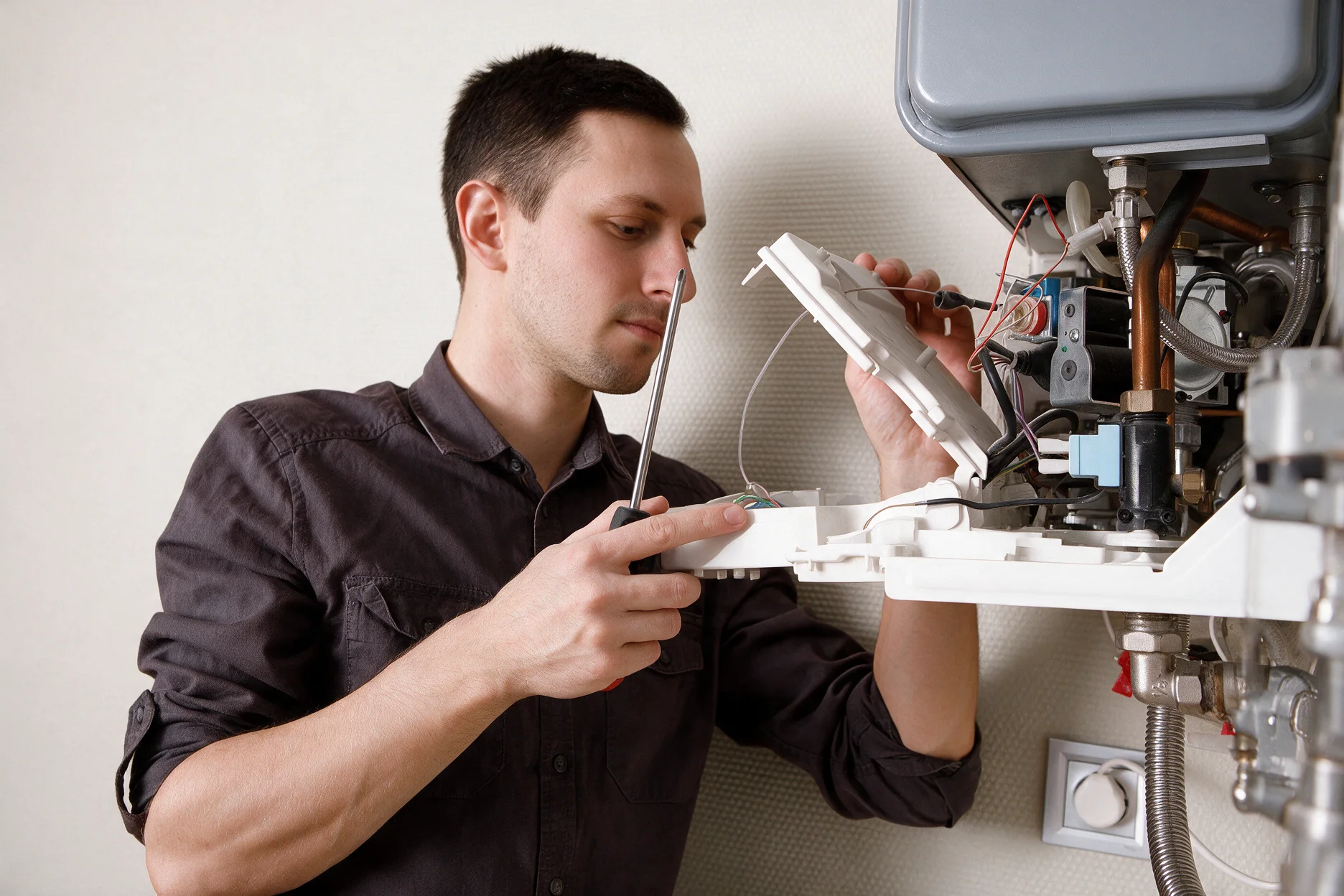
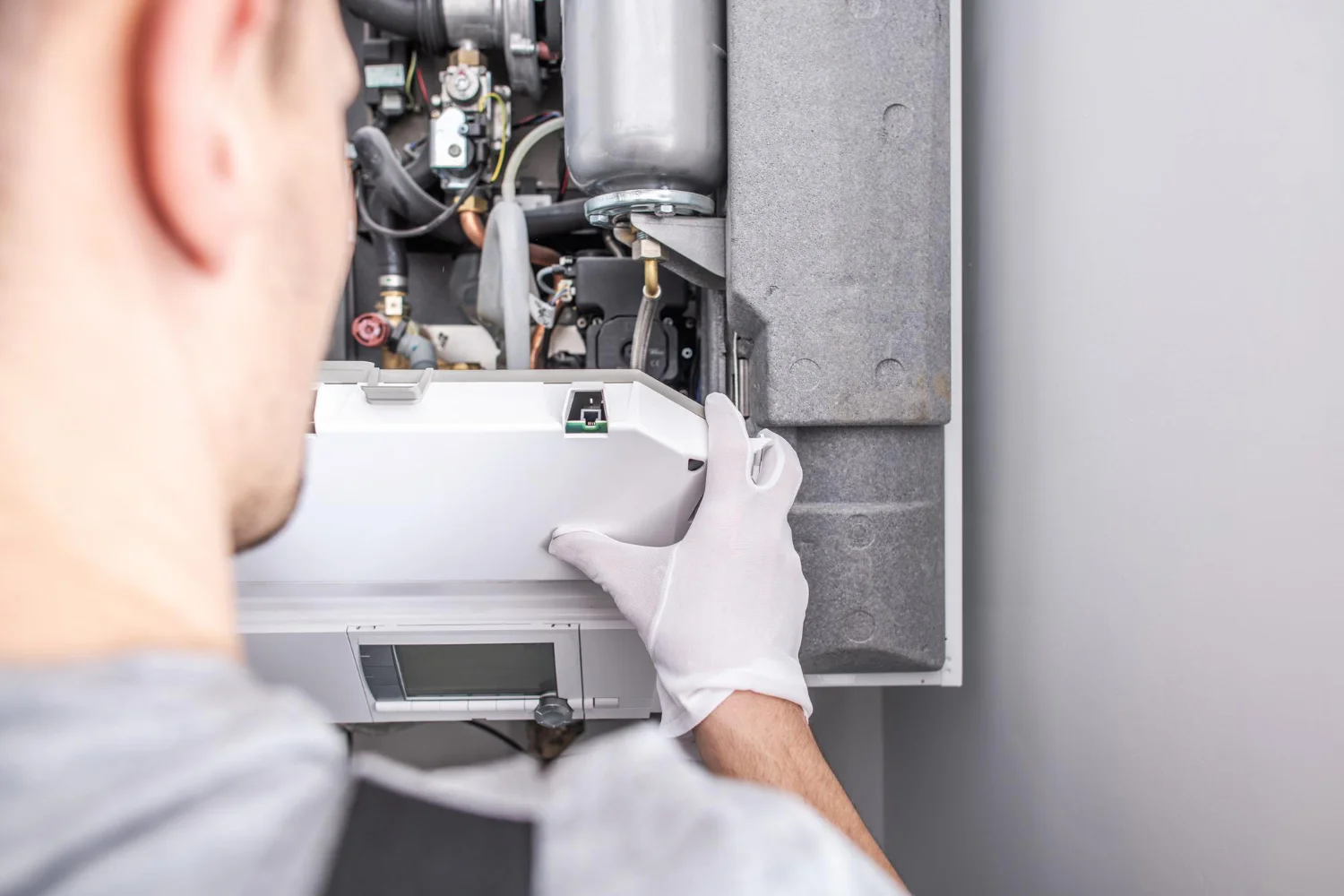
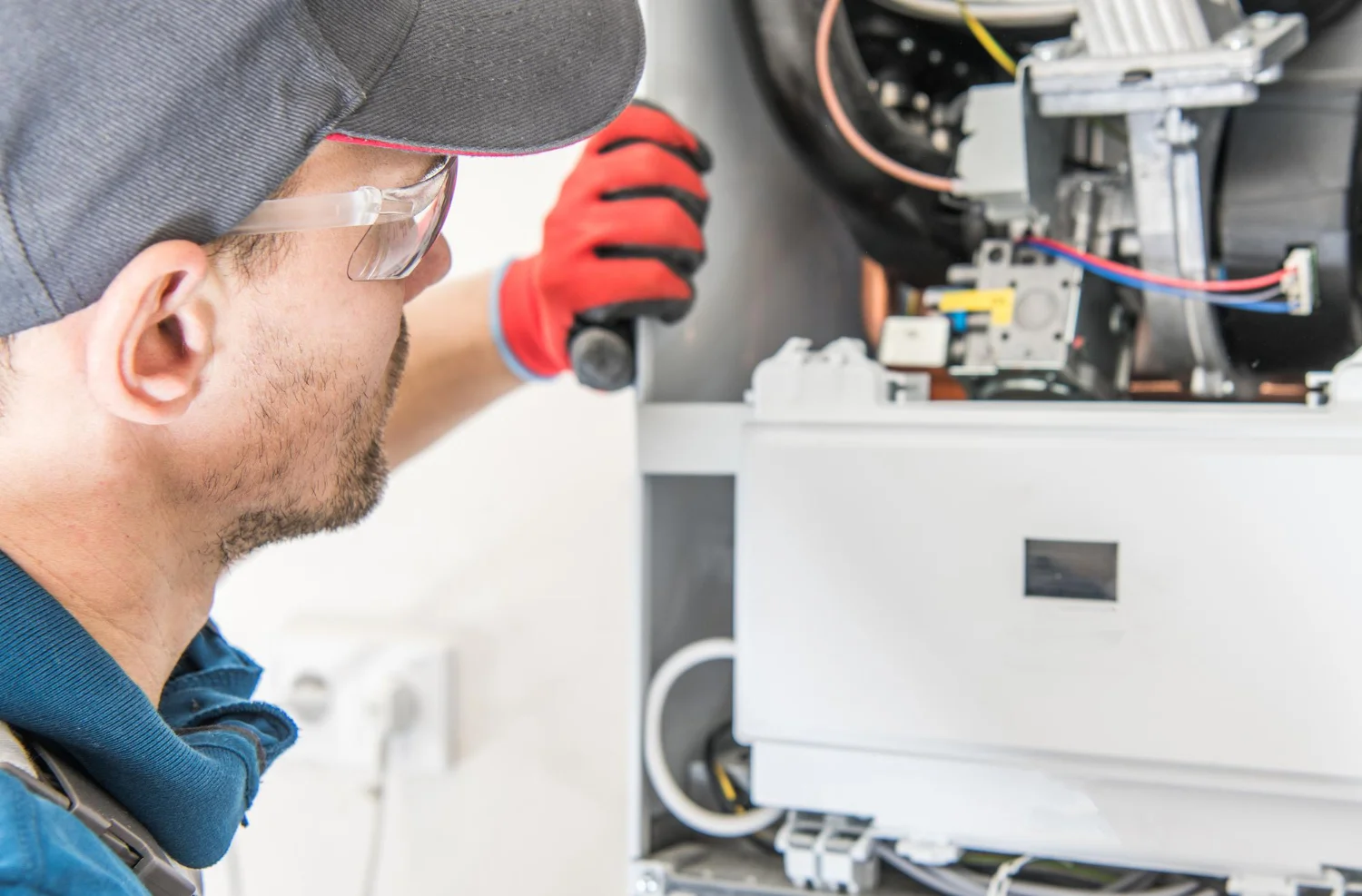
This is why an engineer should diagnose the fault before a repair or replacement decision is made. A boiler that appears to have a serious problem may only require one component to be addressed.
If your boiler has developed recurring hot water or performance problems, Kentish Plumbers can assess the appliance and explain whether repair or replacement is worth considering.
What factors affect the cost of repairing a boiler?
The price of a repair is not determined by limescale alone. Several variables can influence what is involved, including:
- The type of fault
- The component that has failed
- The age and model of the boiler
- How accessible the component is
- Whether replacement parts are available
- The time required to complete the work
- Whether other issues are discovered during diagnosis
- The overall condition of the appliance
For someone researching boiler repair cost Tonbridge, it is therefore more useful to think about the individual fault than to rely on a single typical figure.
A professional assessment should establish what has failed and what work is actually required. This can then be compared with the condition and expected future life of the boiler.
When does repair stop making financial sense?
Repair becomes harder to justify when the appliance is older, has developed several unrelated faults or requires expensive components that may not provide a reasonable period of continued service.
This does not mean there is a fixed age at which every boiler should be replaced. Two boilers of the same age can be in very different condition because their usage, maintenance and installation histories may differ.
A useful way to approach the decision is to look beyond today’s repair bill. Consider how the boiler has performed recently, whether faults are becoming more frequent and whether other components are showing signs of wear.
If a relatively small repair restores a well-maintained boiler to reliable operation, replacement may not be necessary. If the repair is one of several significant costs in a declining appliance, a new system may deserve closer consideration.
How does limescale influence a repair-or-replace assessment?
Limescale can be one piece of the overall picture, particularly if problems repeatedly affect the domestic hot water side of a boiler.
An engineer may consider whether scale-related deposits have contributed to a component failure, whether other parts remain in good condition and whether the same type of problem is likely to recur.
The key distinction is between treating the symptom and understanding the condition of the appliance. Replacing one component can solve the immediate fault, but it does not make an ageing boiler new again.
For a newer appliance in otherwise good condition, repairing the affected component may be perfectly reasonable. For an older boiler with several existing concerns, the same repair could be an opportunity to discuss longer-term options.
What should be included when comparing a new boiler with a repair?
A proper comparison should look at the complete project rather than simply comparing one repair invoice with the price of a new appliance.
| Factor | Existing boiler repair | New boiler |
| Immediate cost | Usually lower than full replacement | Higher upfront investment |
| Appliance age | Remains unchanged | New appliance |
| Existing components | Other ageing parts remain | New components throughout the appliance |
| Future repairs | Depends on overall condition | Usually less immediate repair exposure |
| Efficiency | Depends on existing boiler | Modern appliance may offer improved efficiency |
| Installation work | Usually limited to the affected fault | May involve removal, installation and system changes |
| Warranty | Existing cover may be limited | New appliance normally comes with manufacturer warranty |
| System suitability | Existing configuration remains | System can be assessed as part of installation |
This comparison helps explain why a higher upfront cost does not automatically mean a replacement is unsuitable, just as a cheaper repair is not automatically the better long-term option.
What makes up the new boiler cost in Tonbridge?
The overall new boiler cost Tonbridge homeowners encounter can vary considerably because installation is not simply the purchase of the boiler itself.
The final price may be influenced by:
- The boiler type and output required
- The property layout
- Existing heating and hot water arrangements
- Flue requirements
- Pipework alterations
- Condensate arrangements
- Controls
- Removal of the existing appliance
- Additional system work identified during the survey
- The complexity and duration of installation
The correct boiler also depends on the home’s heating and hot water requirements. Choosing an appliance solely because it has a lower purchase price can create problems if it is poorly matched to the property.
For that reason, an installer should assess the existing system before providing a firm recommendation and quotation.
If you are weighing up repair against a new boiler, contact Kentish Plumbers for tailored advice. An assessment can help establish what your existing system needs before you commit to major work.
Could a replacement reduce future limescale problems?
A new boiler does not make hard water disappear. If the property’s water supply is hard, scale can still form in suitable conditions.
However, replacing an old appliance provides an opportunity to consider the wider system at the same time. An installer can assess whether water treatment or scale-management measures are appropriate and whether anything else should be addressed during installation.
The solution should be proportionate to the property. Not every home needs the same equipment, and a professional should consider the particular water supply, appliance and heating arrangement before recommending additional measures.
This is particularly relevant when replacing a boiler because the aim should be to create a suitable system rather than simply exchange one appliance for another.
Does boiler efficiency affect the replacement decision?
It can. Older boilers may have lower seasonal efficiency than modern condensing appliances, although actual savings depend on how the system is used and the condition and controls of the existing installation.
A replacement decision should therefore consider running costs alongside installation cost. However, predicted savings should be treated carefully because household energy use varies.
If the existing boiler is reliable and has no significant problems, efficiency alone may not justify immediate replacement for every household. If the boiler is already approaching the end of its useful service life and requires an expensive repair, efficiency and future running costs become more relevant to the overall calculation.
When is boiler replacement in Tonbridge worth discussing?
Boiler replacement Tonbridge homeowners are considering should be based on the condition of the whole system rather than one isolated fault.
Replacement may be worth discussing where:
- The boiler is older and increasingly unreliable
- Breakdowns are becoming more frequent
- Several significant components require attention
- A repair would represent a substantial proportion of replacement cost
- Suitable replacement parts are difficult to obtain
- Hot water performance has deteriorated repeatedly
- The existing appliance no longer suits household requirements
- The heating system would benefit from updated controls or configuration
None of these factors automatically means replacement is necessary. They simply provide reasons to investigate whether a new installation could make more practical sense.
What questions should you ask before approving a repair?
If a boiler has developed a scale-related or suspected scale-related fault, homeowners can ask the engineer some straightforward questions.
First, ask what has actually failed. This helps separate a confirmed diagnosis from a possibility.
Next, ask whether limescale is the direct cause, a contributing factor or unrelated to the fault. It is also reasonable to ask whether other components are showing signs of deterioration.
Finally, ask what the engineer would expect from the boiler after the repair. No one can guarantee how long an existing appliance will continue operating, but its condition can help inform the decision.
For anyone comparing boiler repair cost Tonbridge households may face with a replacement quotation, these questions provide useful context.
A typical Tonbridge repair-or-replace scenario
Imagine a semi-detached home with an older combi boiler. The heating continues to work, but the hot water becomes inconsistent and the boiler begins making unusual noises.
An inspection finds a component affected by scale deposits. The rest of the appliance is in reasonable condition, with a history of routine maintenance and no significant recent breakdowns. In this situation, repairing the affected component could be a practical approach.
Now consider the same fault occurring in an older boiler that has already needed several repairs. If the pump, controls and other components are also showing signs of age, the homeowner may reasonably want to compare another repair with the cost and benefits of a new installation.
The important difference is the condition of the complete appliance, not simply the presence of limescale.
How can you keep future boiler costs under control?
There is no way to eliminate every heating repair, but sensible maintenance can help homeowners identify developing problems earlier.
Useful measures include:
- Arrange servicing in line with manufacturer guidance
- Pay attention to changes in hot water performance
- Investigate unusual noises rather than ignoring them
- Keep records of significant repairs
- Ask whether recurring faults have an underlying cause
- Consider water quality when discussing replacement or system upgrades
- Use appropriately qualified heating professionals for installation and repair work
Early diagnosis does not guarantee a cheaper outcome, but it can give homeowners more options. A small developing problem may be easier to address before it causes a wider failure.
Look beyond the repair bill
Limescale can complicate boiler problems, but it should not dictate the repair-or-replace decision on its own. The most useful assessment considers the actual fault, appliance age, repair history, condition of other components and the likely value of continued repairs.
For homeowners considering a new boiler cost Tonbridge quotation, installation should also be assessed as a complete project. Boiler choice, system condition, water quality, controls and installation requirements can all affect the final result.
Kentish Plumbers can help homeowners understand these factors without relying on assumptions about limescale alone. Whether the sensible next step is repair, servicing or a new installation, professional assessment provides a clearer basis for making the decision.
If your boiler is becoming unreliable or you are unsure whether repair is still worthwhile, speak to Kentish Plumbers. Our team can assess the system and provide practical guidance on the available options.
Related articles

At a glance
There is no single answer based on limescale alone. The condition and age of the boiler, the nature of the fault, the cost of the repair and the likely future reliability of the appliance all need to be considered together.
Understanding these factors can make a costly heating decision much clearer. Rather than assuming that scale means a boiler has reached the end of its life, homeowners can look at the evidence and decide what level of work makes practical sense.
Can limescale make boiler repairs more expensive?
Potentially, although the effect depends on which components are affected and how extensive the problem is. Limescale can interfere with heat transfer and water flow, particularly within components involved in producing domestic hot water.
A simple fault may have a relatively straightforward solution, while a heavily affected component may require more extensive work. The presence of scale can also be a contributing factor rather than the direct cause of a breakdown.
This is why an engineer should diagnose the fault before a repair or replacement decision is made. A boiler that appears to have a serious problem may only require one component to be addressed.
If your boiler has developed recurring hot water or performance problems, Kentish Plumbers can assess the appliance and explain whether repair or replacement is worth considering.
What factors affect the cost of repairing a boiler?
The price of a repair is not determined by limescale alone. Several variables can influence what is involved, including:
- The type of fault
- The component that has failed
- The age and model of the boiler
- How accessible the component is
- Whether replacement parts are available
- The time required to complete the work
- Whether other issues are discovered during diagnosis
- The overall condition of the appliance
For someone researching boiler repair cost Tonbridge, it is therefore more useful to think about the individual fault than to rely on a single typical figure.
A professional assessment should establish what has failed and what work is actually required. This can then be compared with the condition and expected future life of the boiler.
When does repair stop making financial sense?
Repair becomes harder to justify when the appliance is older, has developed several unrelated faults or requires expensive components that may not provide a reasonable period of continued service.
This does not mean there is a fixed age at which every boiler should be replaced. Two boilers of the same age can be in very different condition because their usage, maintenance and installation histories may differ.
A useful way to approach the decision is to look beyond today’s repair bill. Consider how the boiler has performed recently, whether faults are becoming more frequent and whether other components are showing signs of wear.
If a relatively small repair restores a well-maintained boiler to reliable operation, replacement may not be necessary. If the repair is one of several significant costs in a declining appliance, a new system may deserve closer consideration.
How does limescale influence a repair-or-replace assessment?
Limescale can be one piece of the overall picture, particularly if problems repeatedly affect the domestic hot water side of a boiler.
An engineer may consider whether scale-related deposits have contributed to a component failure, whether other parts remain in good condition and whether the same type of problem is likely to recur.
The key distinction is between treating the symptom and understanding the condition of the appliance. Replacing one component can solve the immediate fault, but it does not make an ageing boiler new again.
For a newer appliance in otherwise good condition, repairing the affected component may be perfectly reasonable. For an older boiler with several existing concerns, the same repair could be an opportunity to discuss longer-term options.
What should be included when comparing a new boiler with a repair?
A proper comparison should look at the complete project rather than simply comparing one repair invoice with the price of a new appliance.
| Factor | Existing boiler repair | New boiler |
| Immediate cost | Usually lower than full replacement | Higher upfront investment |
| Appliance age | Remains unchanged | New appliance |
| Existing components | Other ageing parts remain | New components throughout the appliance |
| Future repairs | Depends on overall condition | Usually less immediate repair exposure |
| Efficiency | Depends on existing boiler | Modern appliance may offer improved efficiency |
| Installation work | Usually limited to the affected fault | May involve removal, installation and system changes |
| Warranty | Existing cover may be limited | New appliance normally comes with manufacturer warranty |
| System suitability | Existing configuration remains | System can be assessed as part of installation |
This comparison helps explain why a higher upfront cost does not automatically mean a replacement is unsuitable, just as a cheaper repair is not automatically the better long-term option.
What makes up the new boiler cost in Tonbridge?
The overall new boiler cost Tonbridge homeowners encounter can vary considerably because installation is not simply the purchase of the boiler itself.
The final price may be influenced by:
- The boiler type and output required
- The property layout
- Existing heating and hot water arrangements
- Flue requirements
- Pipework alterations
- Condensate arrangements
- Controls
- Removal of the existing appliance
- Additional system work identified during the survey
- The complexity and duration of installation
The correct boiler also depends on the home’s heating and hot water requirements. Choosing an appliance solely because it has a lower purchase price can create problems if it is poorly matched to the property.
For that reason, an installer should assess the existing system before providing a firm recommendation and quotation.
If you are weighing up repair against a new boiler, contact Kentish Plumbers for tailored advice. An assessment can help establish what your existing system needs before you commit to major work.
Could a replacement reduce future limescale problems?
A new boiler does not make hard water disappear. If the property’s water supply is hard, scale can still form in suitable conditions.
However, replacing an old appliance provides an opportunity to consider the wider system at the same time. An installer can assess whether water treatment or scale-management measures are appropriate and whether anything else should be addressed during installation.
The solution should be proportionate to the property. Not every home needs the same equipment, and a professional should consider the particular water supply, appliance and heating arrangement before recommending additional measures.
This is particularly relevant when replacing a boiler because the aim should be to create a suitable system rather than simply exchange one appliance for another.
Does boiler efficiency affect the replacement decision?
It can. Older boilers may have lower seasonal efficiency than modern condensing appliances, although actual savings depend on how the system is used and the condition and controls of the existing installation.
A replacement decision should therefore consider running costs alongside installation cost. However, predicted savings should be treated carefully because household energy use varies.
If the existing boiler is reliable and has no significant problems, efficiency alone may not justify immediate replacement for every household. If the boiler is already approaching the end of its useful service life and requires an expensive repair, efficiency and future running costs become more relevant to the overall calculation.
When is boiler replacement in Tonbridge worth discussing?
Boiler replacement Tonbridge homeowners are considering should be based on the condition of the whole system rather than one isolated fault.
Replacement may be worth discussing where:
- The boiler is older and increasingly unreliable
- Breakdowns are becoming more frequent
- Several significant components require attention
- A repair would represent a substantial proportion of replacement cost
- Suitable replacement parts are difficult to obtain
- Hot water performance has deteriorated repeatedly
- The existing appliance no longer suits household requirements
- The heating system would benefit from updated controls or configuration
None of these factors automatically means replacement is necessary. They simply provide reasons to investigate whether a new installation could make more practical sense.
What questions should you ask before approving a repair?
If a boiler has developed a scale-related or suspected scale-related fault, homeowners can ask the engineer some straightforward questions.
First, ask what has actually failed. This helps separate a confirmed diagnosis from a possibility.
Next, ask whether limescale is the direct cause, a contributing factor or unrelated to the fault. It is also reasonable to ask whether other components are showing signs of deterioration.
Finally, ask what the engineer would expect from the boiler after the repair. No one can guarantee how long an existing appliance will continue operating, but its condition can help inform the decision.
For anyone comparing boiler repair cost Tonbridge households may face with a replacement quotation, these questions provide useful context.
A typical Tonbridge repair-or-replace scenario
Imagine a semi-detached home with an older combi boiler. The heating continues to work, but the hot water becomes inconsistent and the boiler begins making unusual noises.
An inspection finds a component affected by scale deposits. The rest of the appliance is in reasonable condition, with a history of routine maintenance and no significant recent breakdowns. In this situation, repairing the affected component could be a practical approach.
Now consider the same fault occurring in an older boiler that has already needed several repairs. If the pump, controls and other components are also showing signs of age, the homeowner may reasonably want to compare another repair with the cost and benefits of a new installation.
The important difference is the condition of the complete appliance, not simply the presence of limescale.
How can you keep future boiler costs under control?
There is no way to eliminate every heating repair, but sensible maintenance can help homeowners identify developing problems earlier.
Useful measures include:
- Arrange servicing in line with manufacturer guidance
- Pay attention to changes in hot water performance
- Investigate unusual noises rather than ignoring them
- Keep records of significant repairs
- Ask whether recurring faults have an underlying cause
- Consider water quality when discussing replacement or system upgrades
- Use appropriately qualified heating professionals for installation and repair work
Early diagnosis does not guarantee a cheaper outcome, but it can give homeowners more options. A small developing problem may be easier to address before it causes a wider failure.
Look beyond the repair bill
Limescale can complicate boiler problems, but it should not dictate the repair-or-replace decision on its own. The most useful assessment considers the actual fault, appliance age, repair history, condition of other components and the likely value of continued repairs.
For homeowners considering a new boiler cost Tonbridge quotation, installation should also be assessed as a complete project. Boiler choice, system condition, water quality, controls and installation requirements can all affect the final result.
Kentish Plumbers can help homeowners understand these factors without relying on assumptions about limescale alone. Whether the sensible next step is repair, servicing or a new installation, professional assessment provides a clearer basis for making the decision.
If your boiler is becoming unreliable or you are unsure whether repair is still worthwhile, speak to Kentish Plumbers. Our team can assess the system and provide practical guidance on the available options.